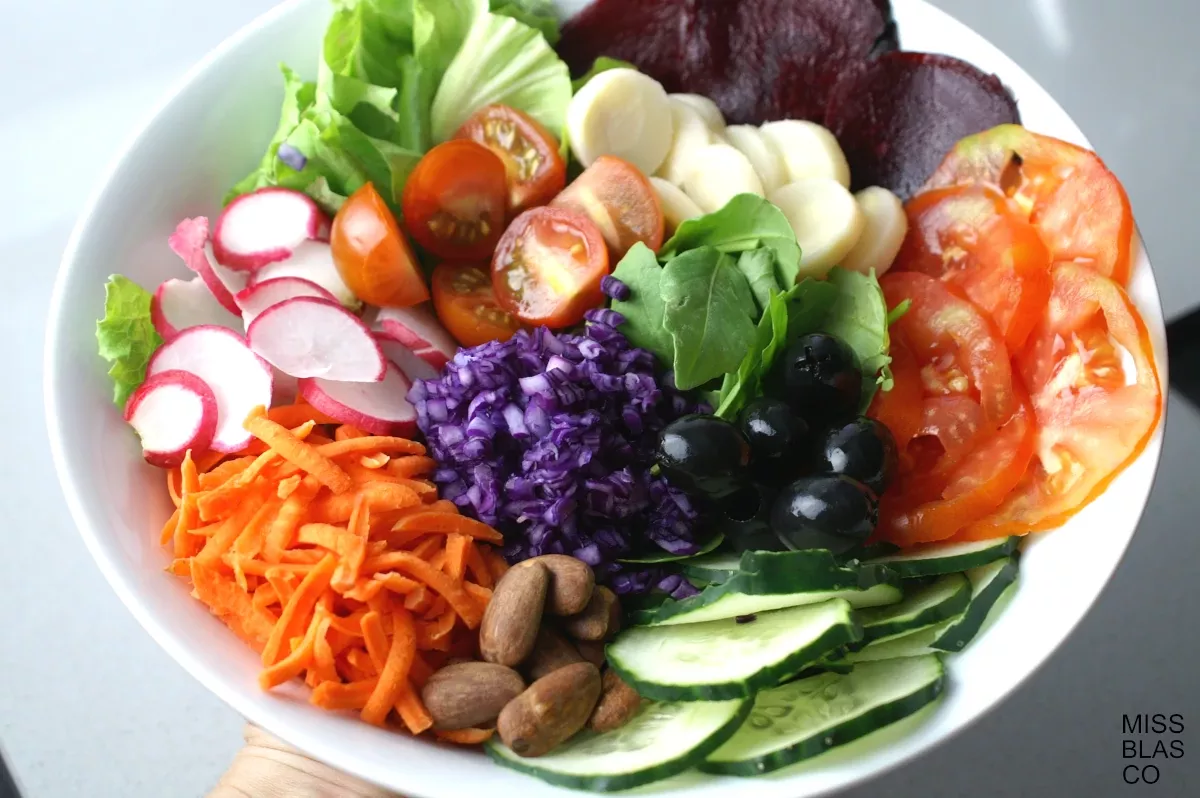
Buddha Bowl
Building Your Bowl: A Seasonal Approach
To maximize the benefits of your bowl, you should adapt your ingredients to the current season. This not only supports local agriculture but also aligns your diet with your body’s changing needs.
Summer Bowls: Refreshing and Hydrating
During the warmer months, focus on hydration and raw textures.
- Base: Arugula, spinach, or blanched green beans.
- Produce: Juicy tomatoes, crunchy carrots, cucumbers, red cabbage, beets, and radishes.
- Protein: Legumes, a soft-boiled egg, or chilled grilled poultry.
- Fats: Fresh avocado or olives.
- Dressing: A light vinaigrette made with extra virgin olive oil, apple cider vinegar, and sesame seeds. Alternatively, try a lemon-tahini dressing for a creamy, calcium-rich finish.
Autumn Bowls: Earthy and Grounding
As the temperature drops, your bowl can transition into warmer, heartier flavors.
- Base: Quinoa, millet, or brown rice to provide a sustained energy boost.
- Produce: Roasted pumpkin, sweet potatoes, and sautéed mushrooms. Incorporate fruits like pomegranate seeds, grapes, or sliced pears for a hit of Vitamin C.
- Protein: Roasted nuts (hazelnuts, walnuts, or almonds) and seeds.
- Fats: This is the ideal time for fresh olives and chestnuts.
- Dressing: A mustard vinaigrette or a warm almond butter and coconut milk reduction.
The Buddha Bowl is the modern evolution of the balanced plate, merging macronutrient precision with culinary creativity.
The Science of the Bowl: Understanding Nutrients
To truly appreciate the value of a Buddha Bowl, we must look at it through the lens of nutritional science. Each ingredient serves a specific purpose, contributing to the two main categories of nutrients: Micronutrients and Macronutrients.
The Role of Micronutrients
Micronutrients include vitamins and minerals. Although required in smaller quantities, they are the “spark plugs” of your metabolism.
| Nutrient | Function | Source |
| Vitamin A | Vision, immunity, and cell growth | Carrots, red peppers, egg yolk, dairy |
| Vitamin D | Calcium absorption and bone health | Oily fish, egg yolk, and moderate sunlight |
| Vitamin E | Powerful antioxidant for immune support | Seeds, nuts, asparagus, broccoli |
| Vitamin K | Blood clotting and bone metabolism | Leafy greens, olive oil, whole grains |
| B Vitamins | Energy metabolism and brain function | Legumes, meat, avocados, potatoes |
| Vitamin C | Iron absorption and collagen synthesis | Citrus, kiwi, bell peppers, broccoli |
Essential minerals such as iron, magnesium, zinc, and potassium are also distributed throughout the various seeds, grains, and greens you include in your bowl.
Seasonal eating is the key to a nutrient-dense bowl, allowing you to cycle through different vitamins and minerals throughout the year.
The Power of Macronutrients
Macronutrients provide the caloric energy your body needs to function daily.
- Healthy Fats: These are essential for the absorption of fat-soluble vitamins (A, D, E, and K). Focus on monounsaturated fats from olive oil and avocados while avoiding harmful trans fats found in ultra-processed foods.
- Proteins: These serve as the building blocks for tissue repair and muscle maintenance. Whether you choose animal-based proteins (complete proteins) or plant-based options like tofu and lentils, they are vital for satiety.
- Carbohydrates: These are your primary energy source. By choosing complex carbohydrates like quinoa or brown rice over refined sugars, you ensure a steady release of glucose into your bloodstream.
Step-by-Step: How to Construct Your Perfect Bowl
Follow this simple formula to ensure every bowl you make is nutritionally complete and delicious.
- Start with a Base: Choose a whole grain like quinoa, brown rice, or even cauliflower rice for a lower-carb option.
- Layer the Veggies: Aim for at least three different colors. This ensures a variety of phytonutrients.
- Add Your Protein: Select a source that fits your dietary preference, grilled salmon, chickpeas, tempeh, or eggs.
- Incorporate Healthy Fats: A quarter of an avocado or a handful of pumpkin seeds adds creaminess and essential fatty acids.
- Drizzle the Dressing: Use homemade dressings to avoid the hidden sugars and preservatives found in store-bought versions.
- The Final Touch: Garnish with fresh herbs, sprouts, or a pinch of sea salt and black pepper to elevate the flavor profile.
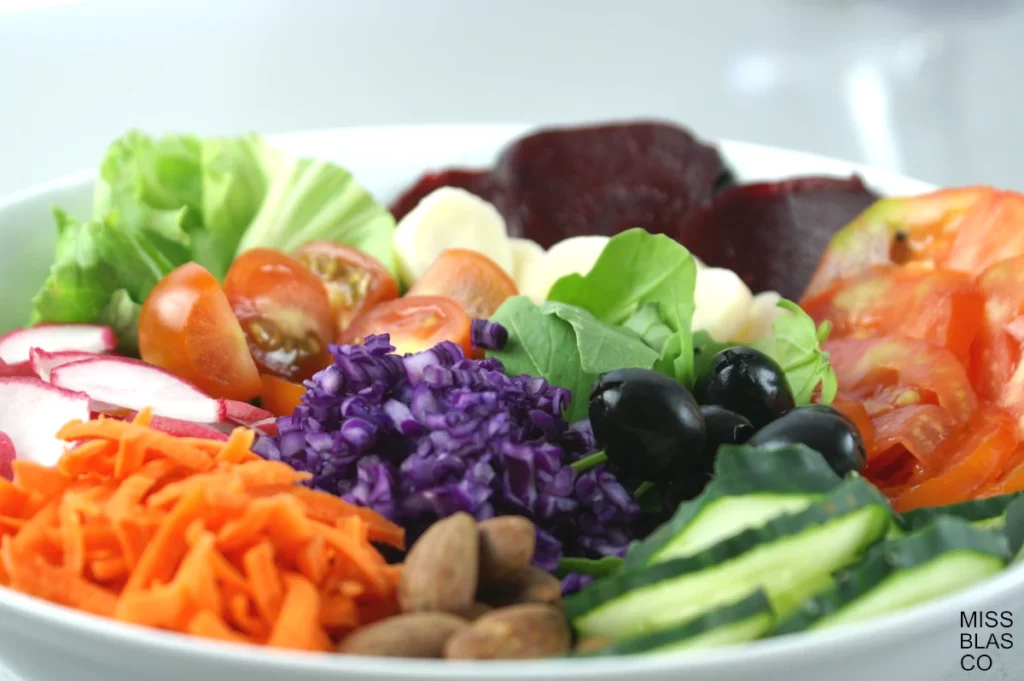
Achieving a “rainbow” on your plate is not just for photography, it is a direct indicator of a diverse antioxidant profile.
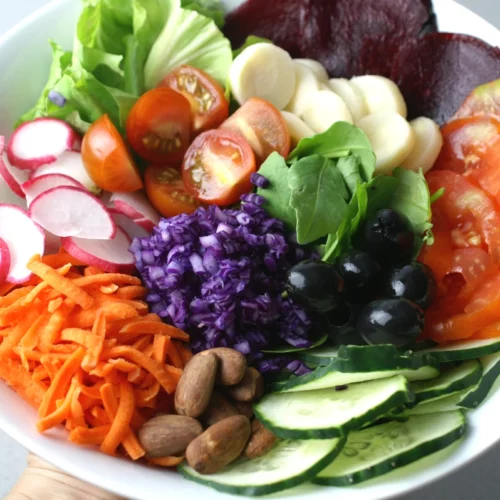
Buddha Bowl
Ingredients
- 1/2 large cucumber
- 1/2 cup shredded romaine or butter lettuce
- 1 cup fresh arugula
- 1 medium carrot
- 2 hearts of palm canned or jarred
- 1/2 cup shredded red cabbage
- 3 radishes
- 1 small beet
- 1/2 beefsteak or vine-ripened tomato
- 4 cherry tomatoes
- 6 black olives whole
- 1/2 cup toasted whole almonds with skin
- 2 tbsp extra virgin olive oil
- 1 tbsp apple cider vinegar
- To taste: Sea salt and freshly cracked black pepper
Instructions
- Prep the vegetables: To create a variety of textures, cut each ingredient differently. Grate or finely shred the red cabbage. Use a vegetable peeler to create long ribbons with the carrot. Thinly slice the beet, cucumber, tomato, and radishes into rounds. Cut the hearts of palm into bite-sized chunks. Keep the olives and toasted almonds whole.
- Assemble the bowl: Arrange all the prepared ingredients neatly in a large bowl. Placing them in separate sections or "piles" creates the vibrant, organized look characteristic of a classic Buddha Bowl.
- Whisk the dressing: In a small ramekin or bowl, combine the olive oil, apple cider vinegar, sea salt, and pepper. Whisk until emulsified.
- Serve: Drizzle the vinaigrette over the bowl at the very last moment, just before serving, to keep the greens crisp. Enjoy the harmony of colors, flavors, and textures.
Notes
EASY, HEALTHY, LOW CALORIES, LOW CARB, POKE BOWL, SALADS, TOMATO, VEGAN, VEGETARIAN
Ana
La comida tiene que entrar por los ojos, cierto.
missblasco
¡Cierto! Es muy importante que lo que vamos a comer nos guste al verlo, hay que comer saludable, pero también sabroso y bonito. ¡Saludos!
Josep Vicent
No me gusta, Me encanta!
missblasco
Muchas gracias Josep Vicent! Lo bueno de estos platos es que puedes variar el aliño y darle toques diferentes. Me alegro de que te haya gustado, ¡Un saludo!.
José Manuel Salto Herrera
Me llama mucho la atención los cortes los colores la combinación de los frutos con las semillas me llama mucho la atención también los aromas los sabores es definitivo los condimentos y no por nada pues tiene una valoración nutrimental muy buena muchas felicidades y muchas gracias por compartir esta receta
missblasco
Gracias José Manuel, me encanta cortar las verduras de diferentes modos y aprovechar todos sus nutrientes, la variedad de colores es genial. Saludos! 😉