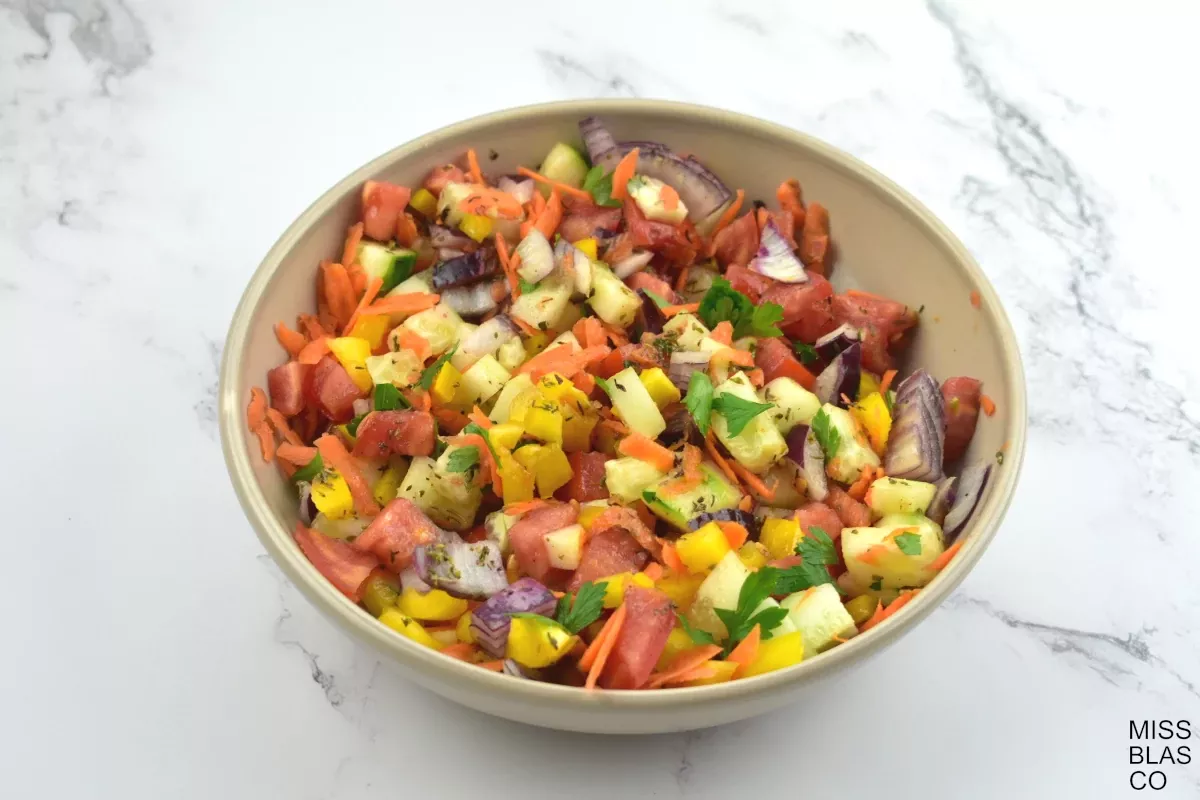
Rainbow Summer Salad
The Rainbow Summer Salad: A Biochemical Approach to Seasonal Nutrition
Visual appeal in nutrition is more than just aesthetics; it is a direct indicator of phytonutrient diversity. This colorful salad is a remarkable example of how seasonal, raw ingredients can influence both our mood and our metabolic health. Salads serve as a versatile base. They can accommodate a wide array of nutrients. Therefore, they are an essential tool in a clinical nutritionist’s repertoire.
During the summer months, utilizing raw vegetables at their peak ripeness ensures a higher concentration of enzymes and heat-sensitive vitamins. This specific combination features red onion, yellow pepper, cucumber, tomato, and grated carrot. Together, these create a spectrum of colors that translates into a diverse range of antioxidants and fibers.
The Science of Texture and Bioavailability
In this preparation, the method of processing the ingredients is as important as the ingredients themselves. For instance, grating raw carrots changes their physical dimension and surface area. It alters the texture and makes the fiber much more pleasant to ingest. From a digestive perspective, breaking down the cell walls of raw vegetables through fine chopping or grating can sometimes assist in the initial stages of mechanical digestion.
To elevate these raw components, a dressing based on Extra Virgin Olive Oil (EVOO) and sherry vinegar is used. EVOO is not merely a fat; it is a vehicle for fat-soluble vitamins (A, D, E, and K) found in the vegetables. Additionally, the addition of dried herbs like oregano, thyme, and mint provides antimicrobial properties. Meanwhile, fresh parsley added at the final moment preserves its high Vitamin C content.
A true salad is defined by the quality of its dressing and the diversity of its ingredients, rather than the simple presence of green leaves.
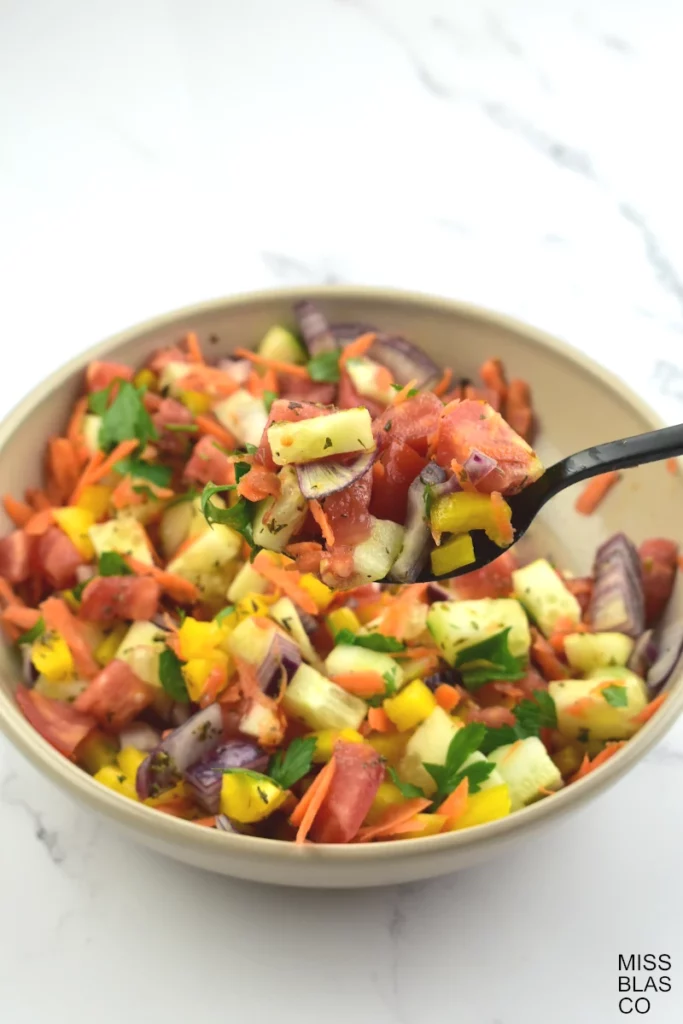
Microbiota Accessible Carbohydrates: Feeding Your Gut Flora
One of the most significant aspects of this rainbow salad is its contribution to the gut microbiome. As we have discussed in previous entries, not all fiber is the same. This dish is particularly rich in MACs (Microbiota Accessible Carbohydrates). These are the specific fibers that our intestinal microbes can metabolize to produce short-chain fatty acids like butyrate.
The Prebiotic Profile of the Rainbow Salad:
- Pectins: Found in both tomatoes and carrots, these soluble fibers help regulate intestinal transit and serve as a primary food source for beneficial bacteria.
- Mucilages: The seeds of the tomato provide these gel-forming fibers that protect the intestinal lining.
- FOS and Inulin: Red onions are a potent source of fructooligosaccharides and inulin, which are highly effective at stimulating the growth of healthy bifidobacteria.
By consuming these raw, seasonal vegetables, you are providing your microbiota with the necessary substrates to strengthen the intestinal barrier. In addition, you help reduce systemic inflammation.
Versatility in the Kitchen: From Side Dish to Main Course
This salad is an ideal “bridge” food. It is robust enough to be taken to the beach or the office in a glass jar. Yet, it is refined enough to serve as a side dish for high-quality proteins.
- For Non-Vegans: It pairs exceptionally well with steamed fish, grilled meats, or soft-boiled eggs and sardines. The healthy fats in sardines (Omega-3) combined with the antioxidants in the vegetables create a powerful anti-inflammatory meal.
- For Vegans and Vegetarians: This base is perfect for embracing legumes. Adding cooked chickpeas or pinto beans transforms the salad into a complete protein meal, as the vitamin C in the peppers and tomatoes enhances the absorption of the non-heme iron found in the beans.
Tomato, carrot, and onion provide essential carbohydrates accessible to the microbiota, promoting a resilient and diverse intestinal flora.
Simplification Through Visual Learning
To demonstrate the ease of this preparation, I have created a concise one-minute video. In modern nutrition, we must remove the barrier of “complexity.” Healthy eating should not be tedious. This video illustrates that with a few precise cuts and a balanced dressing, you can create a dish that fits into a museum. At the same time, it belongs on your dinner table.
The play of textures, the crunch of the yellow pepper, the juiciness of the cucumber, and the bite of the red onion, ensures that the eating experience is as stimulating as the nutritional profile.
Seasonal ingredients ensure maximum nutrient density, making the summer the optimal time to enjoy this vibrant, leaf-free salad.
Summary of Nutritional Benefits
Phytonutrient Diversity: Each color represents a different class of antioxidants (lycopene in tomatoes, beta-carotene in carrots, etc.).
Hydration: The high water content in cucumbers and peppers supports cellular hydration during heat.
Metabolic Support: The high fiber content prevents glucose spikes, making this an excellent choice for those managing diabetes or insulin resistance.
Digestive Health: Through the provision of FOS, inulin, and pectins.
Choosing “real food” in its most colorful form is the simplest way to ensure you are meeting your daily micronutrient requirements. Cook when you can, mix when you are in a hurry, but always prioritize the quality of your ingredients.
I would love to see your versions of this rainbow salad. Did you add a different protein or perhaps a unique herb to your dressing? Let me know in the comments below, as your experiences help build our community of healthy eaters.
Discover more nourishing salads:
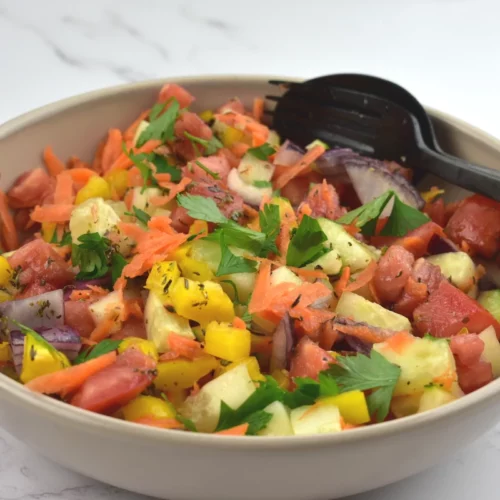
Rainbow Summer Salad
Ingredients
The Salad
- 3 Roma tomatoes
- 1 Medium cucumber
- 1 Small red onion Or half of a medium one.
- 2 Carrots Grated
- 1 Bell pepper: Yellow, green, or red.
- 1 tbsp Fresh parsley: Finely chopped.
The Dressing: Vinaigrette
- 2 tsp Dried oregano
- 1 tsp Dried thyme
- 1 tsp Dried mint Or dried spearmint.
- 1 pinch Black or white pepper
- 1 pinch Sea salt
- 2 tbsp Extra Virgin Olive Oil EVOO.
- 1 tbsp Sherry vinegar You can substitute with Apple Cider Vinegar, white wine vinegar, or balsamic.
Instructions
- Prep the Veggies: Dice all the vegetables into small, uniform pieces. The more even they are, the better the textures will blend in every bite.
- Grate the Carrots: Use a box grater to shred the two carrots.
- Combine: In a large mixing bowl, toss the diced vegetables and the grated carrots together.
- Whisk the Dressing: In a separate small bowl or jar, whisk together all the dressing ingredients until well combined.
- Serve: Drizzle the vinaigrette over the salad at the very last moment before serving to keep the vegetables crisp.
Notes
- Chill Time: This salad is best served cold. I recommend leaving the vegetable mix in the refrigerator for a while before eating.
- Pro Tip: Remember to add the dressing just before serving to prevent the vegetables from releasing too much water and losing their crunch.
BASICS, EASY, FIBER, LOW CARB, MACs, PREBIOTIC FIBER, SALAD, SUMMER RECIPE, VITAMINS