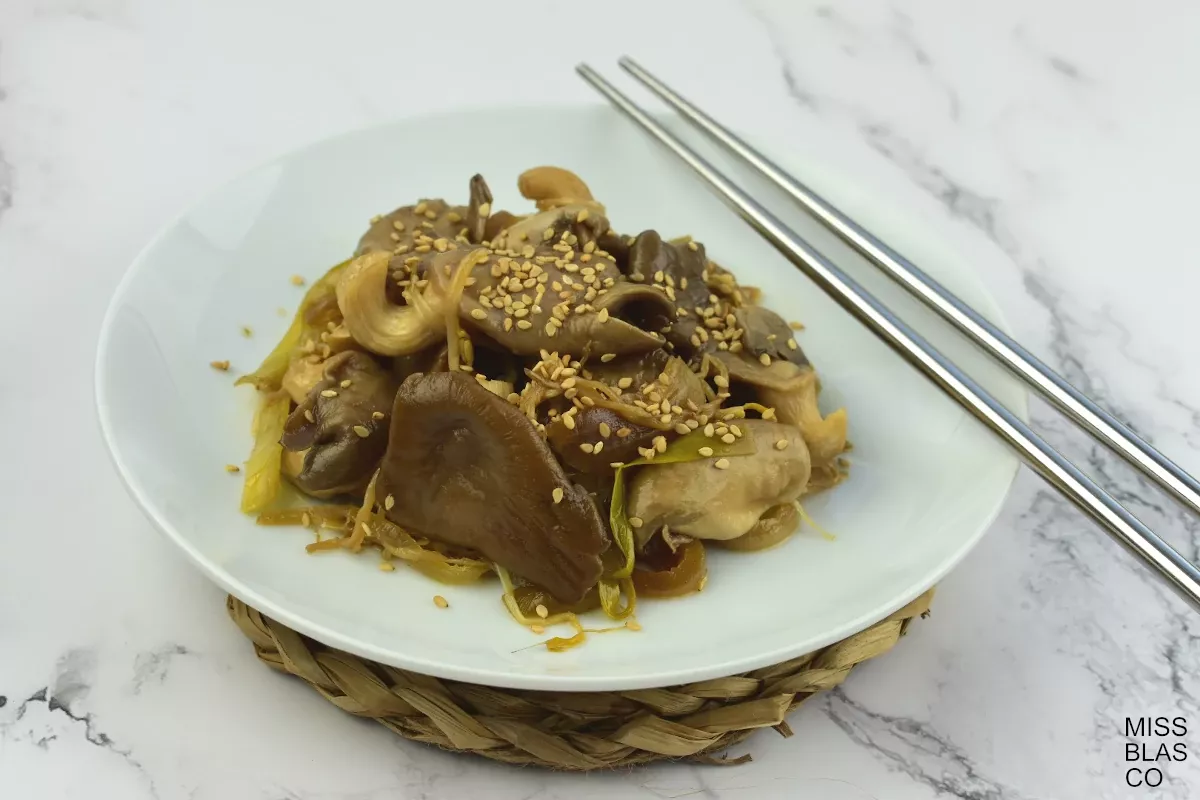
Mushroom Stir-Fry
Mushroom and Mung bean Stir-Fry: A Essential Recipe for Your Gut Microbiota
This mushroom stir-fry is one of those preparations that I consider essential in any healthy kitchen. It is a dish full of nuances, with varied textures, that can be prepared in a very short time and allows for multiple variations depending on the season.
As a nutritionist, mushrooms are one of my favorite foods. Not only for their culinary versatility but also because they provide high-quality nutrients to our bodies. They belong to the group of foods containing Microbiota Accessible Carbohydrates (MACs), which are fundamental for the balance of our internal ecosystem.
The Importance of Mushrooms as Natural Prebiotics
Mushrooms provide a specific type of fiber that can be metabolized by the bacteria in our gut. This process is key to improving and diversifying the bacterial colony that lives within us. By consuming this mushroom stir-fry, you are offering direct “food” to the beneficial microorganisms in your digestive system.
The wok stir-fry technique allows the ingredients to retain their freshness and nutritional properties. The recipe includes leek, onion, a selection of mushrooms, and mung bean sprouts, all seasoned with Oriental sauces like oyster and soy sauce, and finished with toasted sesame seeds for an extra boost of calcium and healthy fats.
A mushroom stir-fry is a simple and tasty dish, but above all, it stands out for its immense nutritional value for the gut-brain axis.
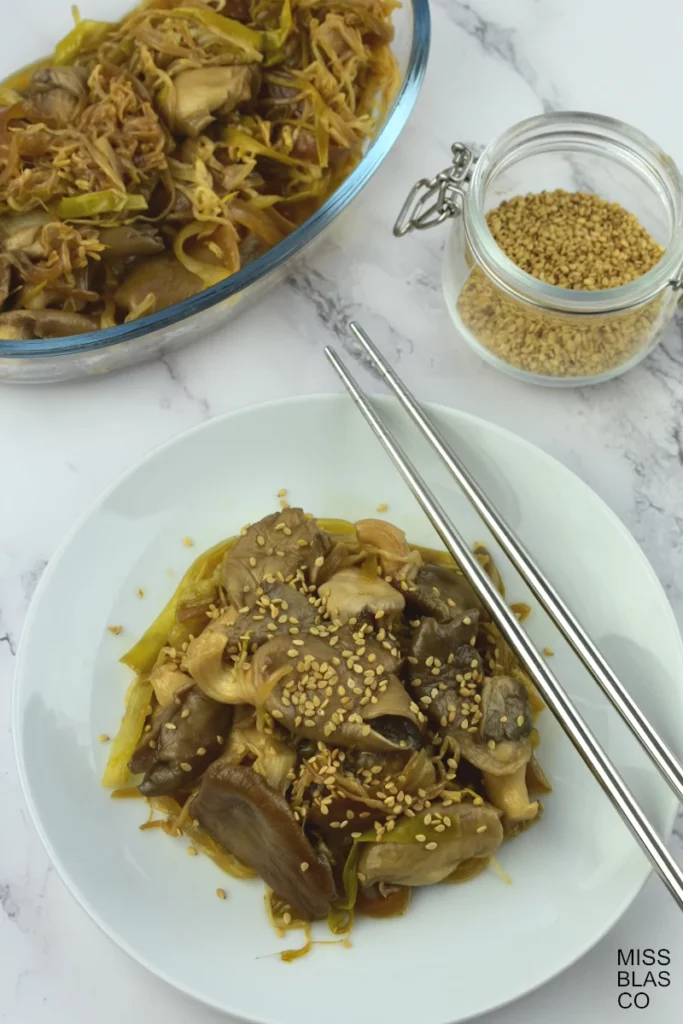
Ingredient Selection and the Role of Sprouting
To start the mushroom stir-fry, you can opt for sesame oil or extra virgin olive oil. Although sesame oil enhances the Oriental character of the dish, its flavor is intense and very specific. In my usual recipes, I prioritize extra virgin olive oil due to its lipid profile and resistance to heat.
An interesting component of this dish is the mung bean sprouts. Sprouting is a process I am passionate about because it drastically improves the properties of food. By sprouting legumes or seeds at home, we eliminate antinutrients, make them easier to digest, and increase the bioavailability of minerals.
On this occasion, I have used canned mung bean sprouts as a quick alternative to provide that characteristic crunchy texture. It is important to be aware that their properties do not equal those of home-sprouted beans, but they represent a practical and tasty option for daily life.
Beta-glucans and Microbiota Diversity
It is advisable to include mushrooms in your diet regularly, varying the species as much as possible. The more fungal diversity we consume, the more we favor the richness of our gut microbiota. Mushrooms are an excellent source of beta-glucans, compounds that act as modulators of the immune system.
Maintaining a healthy microbiota is one of the best defenses for our body. A balanced intestinal ecosystem strengthens the immune system and optimizes the communication of the gut-brain axis, a bidirectional system that conditions many aspects of our general health.
Mushrooms provide beta-glucans, essential compounds that help improve, diversify, and protect our microbiota.
The Gut-Brain Axis and Disease Prevention
Science has shown that the brain, the gut, and the microbiota are intimately connected. A healthy and diverse microbiota is not only responsible for digestion; it also plays a preventive role in neurodegenerative diseases such as Alzheimer’s or Parkinson’s.
A healthy connection in this axis can help avoid conditions such as:
- Food allergies and intolerances.
- Symptoms of anxiety and chronic stress.
- Digestive system disorders.
- Systemic inflammatory processes.
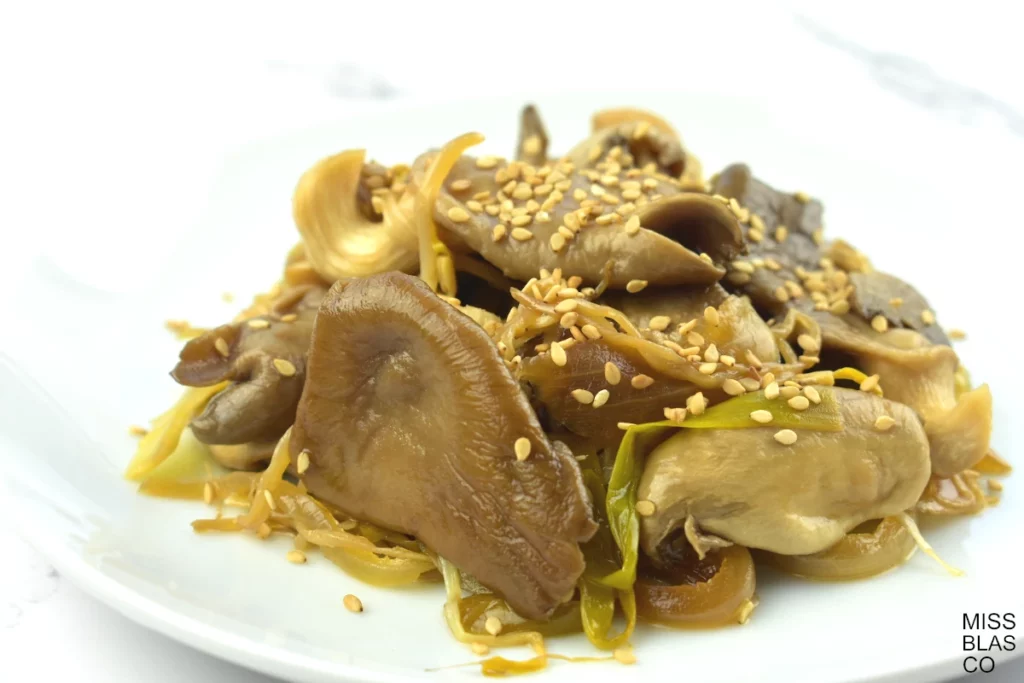
Other Foods Rich in Beta-glucans: Seaweed
If you are looking to boost the benefits of the mushroom stir-fry, you might consider including seaweed. Like mushrooms, seaweed is rich in beta-glucans. Integrating both food groups into a varied diet is a winning strategy for strengthening the immune system and maintaining the integrity of the intestinal barrier.
How to Prepare the Perfect Mushroom Stir-Fry
The key to this dish lies in the order of the ingredients and the heat of the stove. By cooking over high heat and quickly, we prevent the mushrooms from releasing too much water and losing their firm texture.
- Aromatic Base: Start by sautéing the leek and onion with a pinch of salt.
- Adding the Mushrooms: Add the mushrooms, chopped uniformly.
- Texture Boost: Introduce the mung bean sprouts at the end so they stay fresh.
- Oriental Dressing: Finish with the soy and oyster sauces, moving the wok so the flavors integrate without burning.
- Final Touch: Sprinkle toasted sesame seeds just before serving.
Comfort food doesn’t have to be high in sugar; this mushroom stir-fry satisfies the palate and looks after your metabolic health.
Health and Gastronomy in One Dish
Preparing this mushroom stir-fry is a conscious way to care for our bodies without giving up the pleasure of a meal with personality. It is a light dish, low in high-glycemic-index carbohydrates, and rich in fermentable fiber.
Implementing these small changes in our routine, such as choosing fresh ingredients and respectful cooking techniques, makes a difference in the long term. I encourage you to experiment with different types of mushrooms (shiitake, button mushrooms, oyster mushrooms) to maximize the variety of MACs in your diet.
Discover more low carb stir-fry recipes:
- Easy Red Cabbage Stir-Fry
- Sprouted Lentils Stir Fry with Mushrooms
- Sprouted Lentils Stir Fry with Vegetables
Mushroom and Mung Bean Stir-Fry
Equipment
- wok or frying pan
Ingredients
- 3.5 oz White onion, julienned 100 g or 1/2 a medium onion
- 3.5 oz Leek sliced 100 g or 1 medium leek
- 5 oz Oyster mushrooms, halved 150 g or 1 standard tray
- 6 oz Canned sprouted mung beans 1 drained jar/can, rinsed and well-drained.
- 3 tbsp Low-sodium soy sauce
- 1 tbsp Oyster sauce
- 1 tsp Sesame seeds lightly roasted
- 1 tbsp Extra virgin olive oil or sesame oil
Instructions
- Sauté the aromatics: Heat the olive oil (or sesame oil) in a wok or large skillet. Sauté the julienned onion and leek. If possible, use quick wrist movements to toss the vegetables as they cook.
- Add mushrooms: Add the halved oyster mushrooms and continue to stir-fry over high heat.
- Add sprouts: Stir in the rinsed and well-drained mung bean sprouts. Keep tossing the mixture to ensure even cooking.
- Season: Add the soy sauce and oyster sauce. Stir well with a spatula or toss to combine. Do not add salt. The sauces provide more than enough flavor and sodium.
- Transfer the stir-fry to a bowl and garnish with toasted sesame seeds.
Notes
- Sodium control: There is no need to add extra salt, as the Oriental sauces already provide a sufficient amount of sodium.
- Equipment: While a wok is ideal for achieving that authentic stir-fry texture, a conventional large skillet works perfectly fine. Just remember to keep the heat high and the ingredients moving.
EASY, FIBER, LOW CARB, MACs, MICROBIOTA, MUSHROOM, PREBIOTIC FIBER, STIR FRY