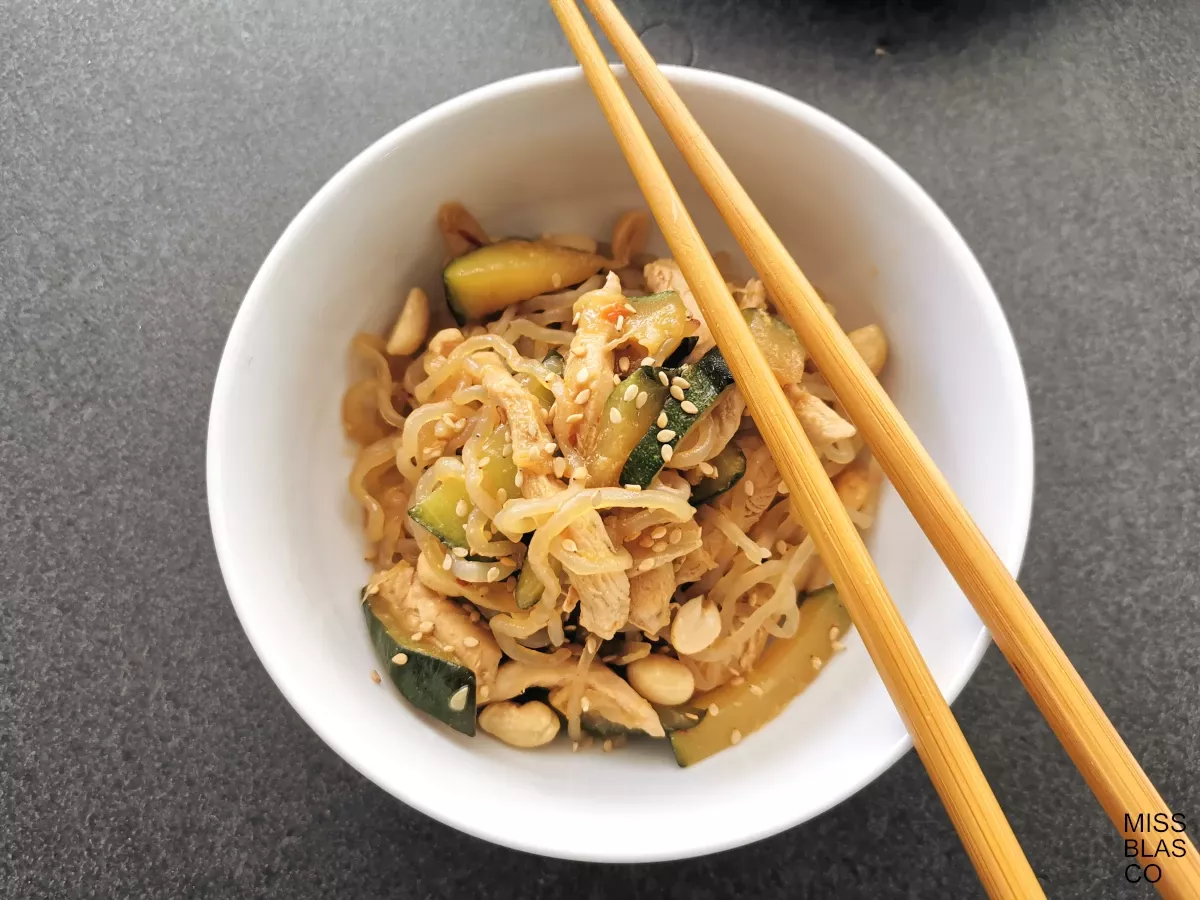
Konjac Noodles Stir Fry with Chicken
Konjac Noodles for Health
When embarking on a journey toward a healthier lifestyle, one of the most significant challenges is managing the psychological and physiological cravings for traditional high-carbohydrate staples. As a clinical dietitian, I often see patients struggle during the initial “transition period”, that delicate stage where the brain continues to demand the glucose-heavy rewards it has been accustomed to for years.
To navigate this phase successfully, we must find culinary allies that bridge the gap between our old habits and our new goals. This Konjac Noodles Stir Fry with Chicken is an exceptional tool for this purpose. Made from konjac flour, these noodles are virtually free of carbohydrates, sugars, and fats, making them a “metabolic miracle” for weight control, diabetes management, and ketogenic protocols.
What is Konjac? The Science of Satiety
The secret behind these translucent, “glass-like” noodles lies in the Konjac root (Amorphophallus konjac). The composition of this ancient Asian root is fundamentally a unique type of soluble fiber called glucomannan.
From a biochemical perspective, glucomannan is fascinating because of its extraordinary ability to absorb water, it can expand up to 50 times its weight. This property provides several clinical advantages:
- Mechanical Satiety: By expanding in the stomach, it signals the brain through mechanoreceptors that you are full, significantly reducing appetite and the urge to overeat.
- Glycemic Control: Because it is pure fiber with zero sugar, it prevents the insulin spikes associated with wheat-based pasta, making it entirely safe for diabetics.
- Digestive Ease: Being a soluble fiber, it moves gently through the digestive tract, acting as a prebiotic for your gut microbiota.
Konjac pasta serves as a powerful “low carb” alternative to wheat, providing the sensory experience of pasta without the inflammatory glycemic load.
Avoiding the “Crassus Error” in Nutrition
Those of us who enjoy history may recall Marcus Licinius Crassus, the Roman consul who, in 55 BC, made a catastrophic blunder by invading Parthia without a justifiable strategic reason. His defeat led to the expression “Crassus Errare”, a “crass error.”
In the world of nutrition, I see a similar “crass error” daily. Many people attempt to change their habits by simply looking for “healthy versions” of everything they currently eat: keto bread, gluten-free cookies, or protein-enriched muffins. While these may have better ingredients, the habit remains the same. The obsession with the format of the food persists.
The goal of using Konjac spaghetti isn’t to remain dependent on pasta forever. The goal is to use them as a tool to reduce the anxiety of the transition. Eventually, you will reach a point where you no longer miss what you used to crave. You will enjoy a piece of grilled salmon with arugula or a beef carpaccio as much as you once enjoyed a bowl of spaghetti. The Konjac noodle is a bridge to a place where pasta is an option, not an obsession.
Building Flavor on a Blank Canvas
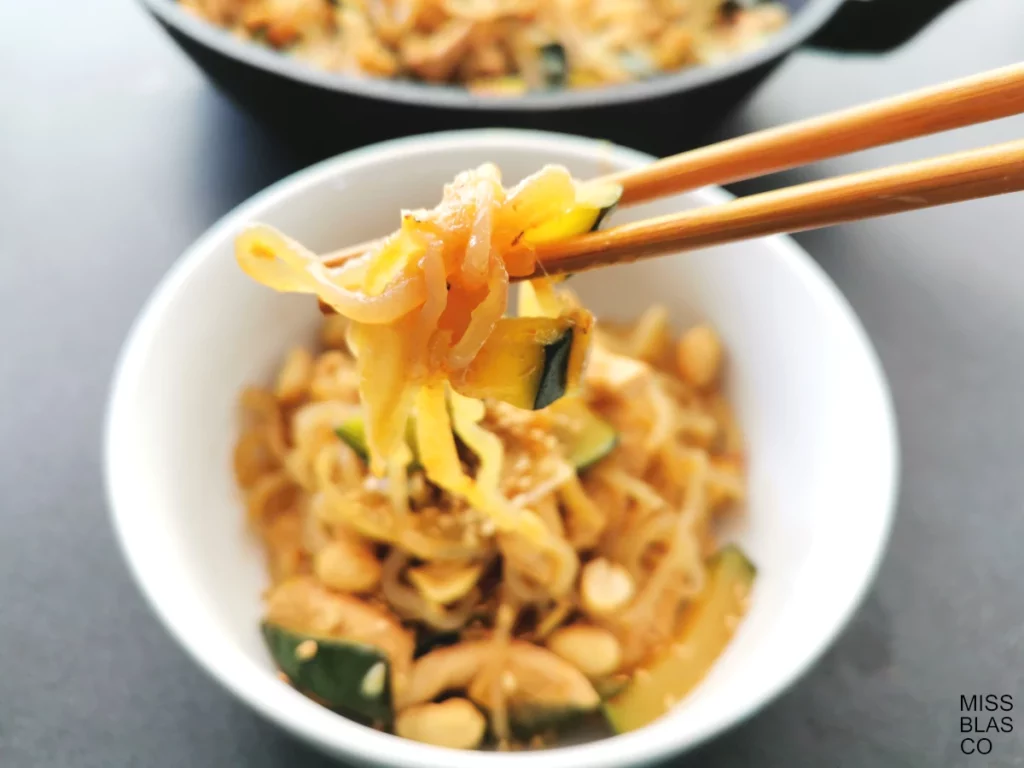
One characteristic of Konjac flour pasta is that it is virtually flavorless and has a unique, slightly chewy texture similar to Chinese glass noodles. Therefore, the success of your dish depends entirely on your ability to create a “powerful” sauce.
1. The Marinade: The Foundation of Flavor
For this recipe, I use chicken breast marinated with a blend of Mediterranean and Oriental influences: lemon juice, soy sauce, and a robust selection of spices. Marinating the protein ensures that every bite provides the “flavor punch” that the noodles lack.
2. The Stir-Fry
A good stir-fry (sofrito) is essential. I recommend using high-quality Extra Virgin Olive Oil (EVOO) and starting with aromatic vegetables:
- Onion and Leek: For sweetness and depth.
- Zucchini: For a soft texture that mimics the noodles.
- Dried Chilies: To provide a thermogenic “kick” that stimulates metabolism.
3. Adding Flavor
Since Konjac noodles don’t absorb flavor the same way wheat pasta does, you need a sauce with body. Using a splash of high-quality broth and a savory soy sauce (preferably low-sodium) creates a liquid environment that coats the noodles, ensuring they are tasty rather than bland.
Utilizing Konjac spaghetti can effectively reduce the psychological anxiety derived from pasta cravings during your dietary transition.
Versatility
While the oriental stir-fry is a classic, the beauty of Konjac is its versatility. You can adapt it to any flavor profile:
- Seafood Medley: Replace chicken with prawns, squid, or cuttlefish for a lighter, mineral-rich meal.
- Veggie Power: Use broccoli florets, julienned carrots, or mushrooms to increase the volume and fiber content.
- Traditional Italian: Prepare a rich Bolognese sauce with grass-fed beef and gratin it with a bit of high-quality aged cheese.
The Nutritional Advantages of Konjac
For those focused on weight loss or blood sugar stability, the data is compelling:
- Zero Carbohydrates: It does not interfere with ketosis or insulin levels.
- Near-Zero Calories: Allows for high-volume eating without caloric excess.
- Improved Digestion: High fiber content.
- Brain Training: It tricks the brain into thinking it is receiving a high-carb “reward,” which lowers cortisol levels associated with food restriction stress.
The ultimate goal is to change habits: swap cookies for nuts, or heavy pizza dough for a cauliflower base, making the transition a sustainable lifestyle rather than a temporary drama.
Practical Preparation: A 1-Minute Guide
To ensure you enjoy these noodles, you must prepare them correctly. I have included a one-minute video below that demonstrates the essential steps: rinsing the noodles thoroughly to remove the natural scent of the Konjac root and sautéing them in the pan with your sauce to achieve the best texture.
Conclusion: A Tool for Lasting Change
Healthy living is a process, not a destination. It is never “from today to tomorrow.” It requires motivation, strategy, and the right tools. Konjac noodles are one of those tools. They allow you to enjoy a comforting, “pasta-like” meal while your body heals its relationship with glucose.
By avoiding the “Crassus Error” of simply replacing processed food with healthy-looking processed food, and instead focusing on whole-food substitutes like Konjac, you are building a foundation for a future where you are in control of your plate, not your cravings.
Other recipes that may interest you:
Konjac Noodles Stir Fry with Chicken
Equipment
- wok
Ingredients
- 14 oz Konjac Noodles Commonly found as "Shirataki" noodles
- 7 oz Chicken breast: Cut into thin strips.
- 3.5 oz Onion Sliced into strips, julienne.
- 4.5 oz Zucchini Cut into matchsticks.
- 1 tbsp Extra Virgin Olive Oil EVOO.
- 1 tbsp Soy sauce Preferably low-sodium.
- 1/3 cup Vegetable or chicken broth.
- 2 tbsp Lemon juice Freshly squeezed.
- 1 pinch Sea salt
- 1 pinch Garlic powder
- 1 pinch Red chili flakes Dried chilies.
- 1 tsp Sesame seeds and toasted peanuts To garnish
Instructions
- Marinate the Chicken: In a small bowl, combine the chicken strips with the lemon juice, sea salt, chili flakes, garlic powder, and soy sauce. Mix well so the meat is thoroughly coated and let it rest for at least 15–20 minutes to absorb the flavors.
- Sauté the Vegetables: Heat the olive oil in a large skillet or wok over medium heat. Add the onion with a pinch of salt. Once it begins to soften and become translucent, add the zucchini matchsticks. Sauté for a few more minutes until tender-crisp.
- Cook the Protein: Create a space in the center of the pan, add a small drizzle of oil if needed, and add the marinated chicken.
- Combine: Using a wooden spatula, gradually incorporate the chicken with the vegetables and cook until the meat is golden and fully cooked through.
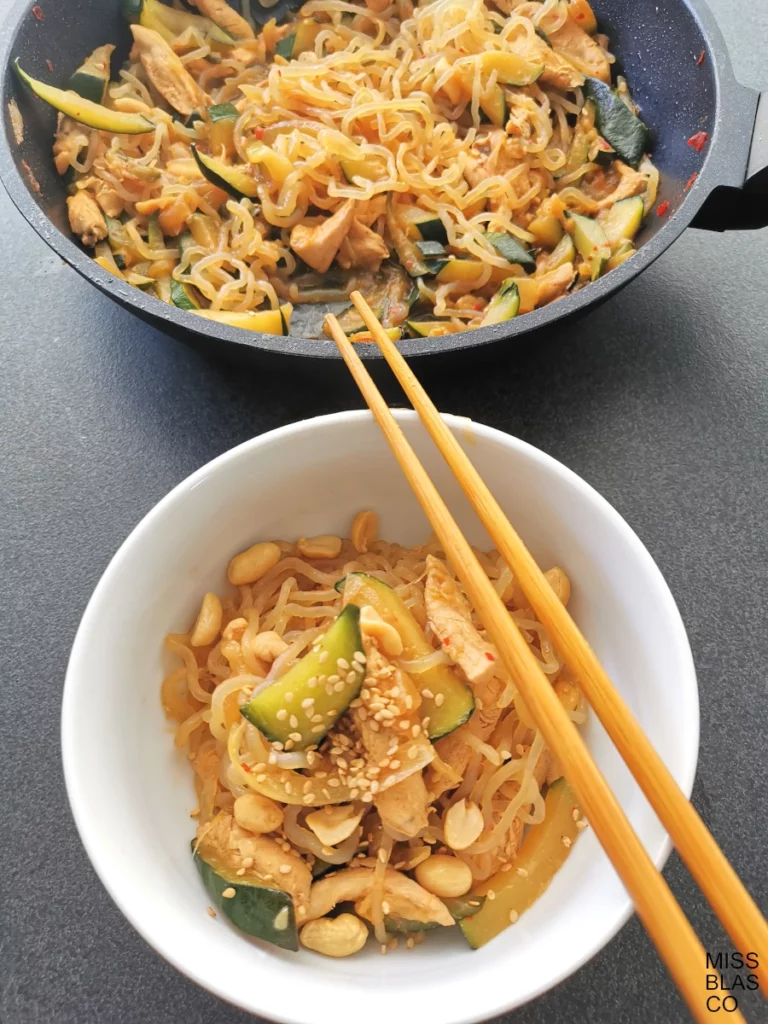
- Prep the Konjac: Open the package of Konjac noodles and rinse them thoroughly under cold running water (this is essential to remove the natural aroma of the root). Drain them well and add them directly to the skillet with the chicken and vegetables.
- Merge Flavors: Stir everything together so the noodles begin to pick up the savory juices from the stir fry.
- Simmer: Increase the heat slightly and pour in the broth. Continue mixing gently and let it simmer for about 5 minutes to allow the noodles to heat through and the flavors to concentrate.
- Final Touch: Taste and adjust the salt if necessary.
- Serve: Transfer the noodles to a bowl and garnish with sesame seeds and toasted peanuts for an authentic oriental crunch.
- A pinch of Red chili flakes: (Dried chilies).
- To garnish: Sesame seeds and toasted peanuts.
GLUTEN FREE, GUT HEALTH, HEALTH, KETO, KONJAC, LOW CALORIES, LOW CARB, NOODLES
Maria
Hasta que no los he hecho y comido no me podía creer lo buenos qué están, muchas gracias por la receta!!!!
missblasco
Gracias María, me alegro muchísimo de que te gusten, es una opción más para tener una dieta variada y para disfrutar. Gracias por tu valoración. Saludos cordiales! 😉
Francisco jose perez
Me parece correcto la receta de espaguetis pero en la tabla de calorías,grasa, ext sobra lo de colesterol 21%, pues este
Proviene solo de nuestro higado. Ningun alimento lo lleva.
Colesterol significa
Col : bilis
Estero : grasa compacta y dura que no se disuelve
Ol : alcohol
Ningun alimento contiene bilis.
missblasco
Hola, bien conocido es que hay alimentos que aportan colesterol, se llama “colesterol dietético”.
Este colesterol de la dieta procede de alimentos de origen animal, aquí te dejo un enlace para que puedas consultar una tabla de alimentos que aportan colesterol: https://www.cun.es/chequeos-salud/vida-sana/nutricion/alimentos-ricos-colesterol
Saludos.
Alicia
Hola exelente receta y exelente los fideos los voy a adoptar gracias!!!👏👏👏👏
missblasco
Gracias, estoy segura de que te gustarán. 😉