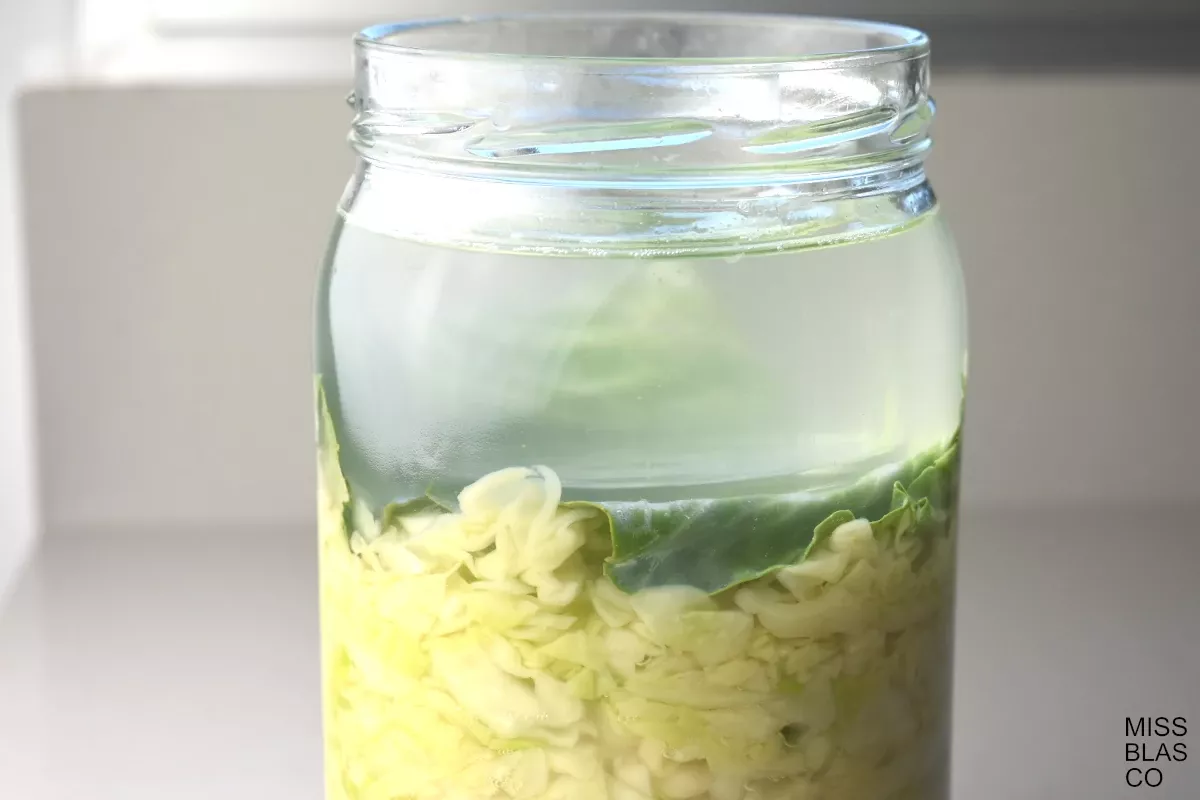
How to Make Sauerkraut at Home
Fermenting cabbage and other vegetables at home is something I wanted to do for many years, but for various reasons, I kept putting it off. A few months ago, I finally got into it, and the results have been so good that I can’t stop sharing them. Once you start fermenting, you simply can’t stop. The food acquires such a special flavor and texture that you immediately want to keep trying and making more complex variations.
Fermenting cabbage at home is the first step to beginning this endless adventure. Whether you are interested in culinary creativity or clinical nutrition, this process is a game-changer.
Fermenting cabbage at home is the most accessible first step to reclaiming your digestive health and beginning an endless culinary adventure.
What Does “Ferment” Actually Mean?
First of all, keep in mind that in a generic sense, fermenting is a way of preserving and transforming food so that it can be consumed over a much longer period of time. We can distinguish between two main types of fermentation:
- Aerobic Fermentation: Occurs in the presence of oxygen (e.g., kombucha, yogurt, or kefir).
- Anaerobic Fermentation: Occurs in the absence of oxygen.
In the case of fermented vegetables, the process is anaerobic, which leads to the formation of lactic acid and the growth of acidophilic bacteria such as Lactobacillus, among others. To help you understand it a little better, fermentation is a catabolic process in which lactic acid is produced.
The process for any vegetable in a salty medium involves the degradation of glucose to obtain metabolic energy. The stars of this show are bacteria like Lactobacillus, Lactococcus, Streptococcus, and Pediococcus.
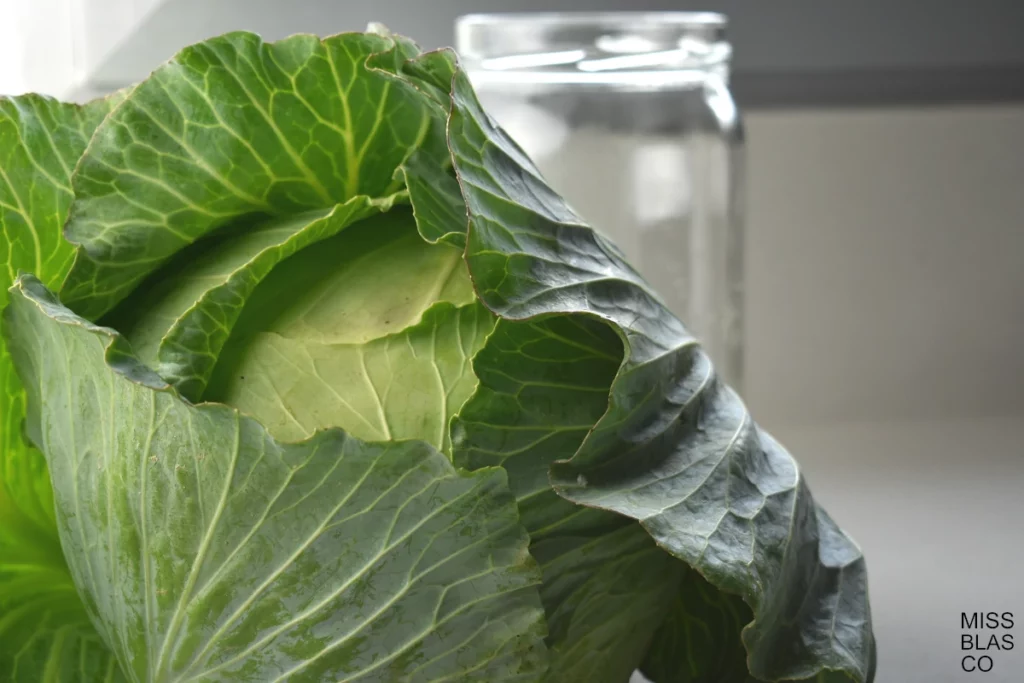
Lactic fermentation occurs in a strictly anaerobic environment, where beneficial bacteria transform glucose into lactic acid, naturally preserving the food.
Probiotics, Prebiotics, and Symbiosis
As a nutritionist, I often talk about the importance of our microbiota. Here is why fermentation matters:
Probiotics: These are foods that contain beneficial bacteria. Fermented vegetables are powerful probiotics. The process develops bacteria that reach your intestine intact, enriching your microbiota.
Prebiotics: These are fibers that promote the growth of good bacteria. They are fermented in the large intestine and act as “food” for your flora.
Our diet should be rich in both. It is the best way to create a symbiosis that is highly favorable for your intestinal health.
Why Should You Do It?
The goal is to improve your diet, nourish yourself better, and benefit from live microorganisms that enrich your flora. Fermented foods are more nutritious and more digestible.
Do you need an advanced microbiology class to do it? No! Fermenting is easy and gives you freedom. You decide the combinations, the flavors, and the textures.
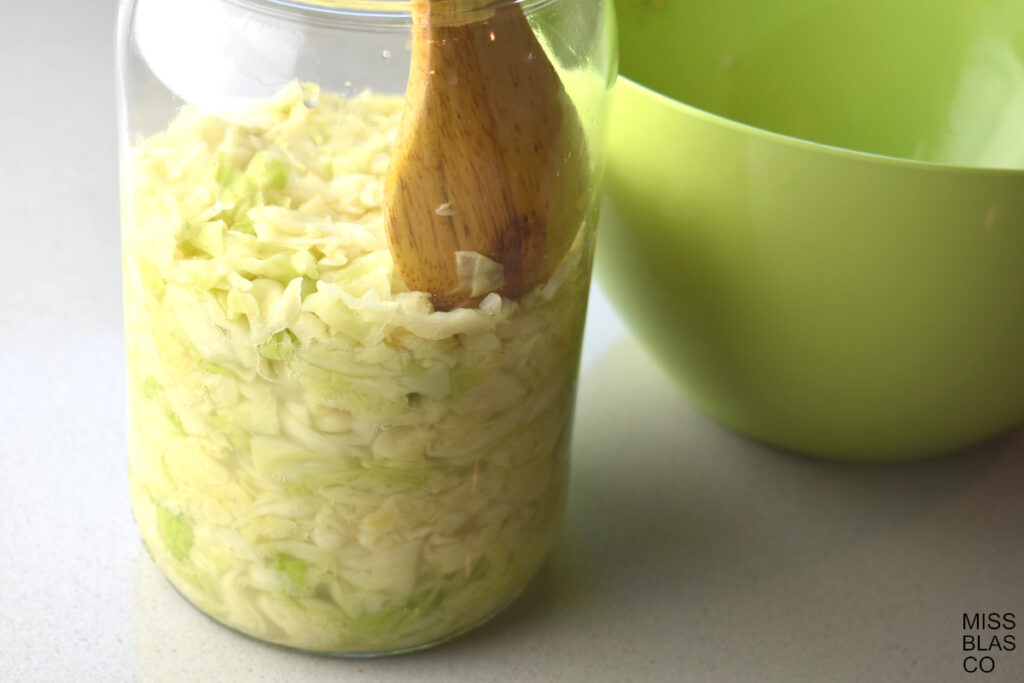
Fermentation is an open process where you only follow basic recommendations, the rest, flavors, textures, and creativity is entirely up to you.
How to Make Sauerkraut: Step-by-Step
Making sauerkraut is a simple process. You only need cabbage, sea salt (without additives), and glass jars with lids. You also need a weight to keep the cabbage submerged and away from oxygen.
Note on Water: If you need to add liquid, always use filtered, chlorine-free water.
-
Step 1: Selection
Buy a cabbage or kale. If you can get one from organic farming, even better, it will have more natural bacteria and fewer chemicals.
-
Step 2: Preparation
Remove the outer leaves. If they are damaged, discard them, if not, wash them and reserve a couple to use as a “topper” later.
-
Step 3: Cutting
Cut the cabbage into julienne strips. Remove the thick, hard stems (save them for a vegetable cream!). Use only the tender parts for the sauerkraut.
-
Step 4: The Massage
Place the cabbage in a large bowl, add salt, and massage it for 10–15 minutes. The goal is for the cabbage to “sweat” and release its water.
Summer vs. Winter: In higher temperatures, fermentation accelerates, so you need more salt. In winter, the process slows down, and you need less.
-
Step 5: Packing the Jars
Your jars should be very clean, but they don’t need to be sterilized. Pack the cabbage in, pressing down with a wooden spoon to remove air bubbles.
Leave some space at the top.
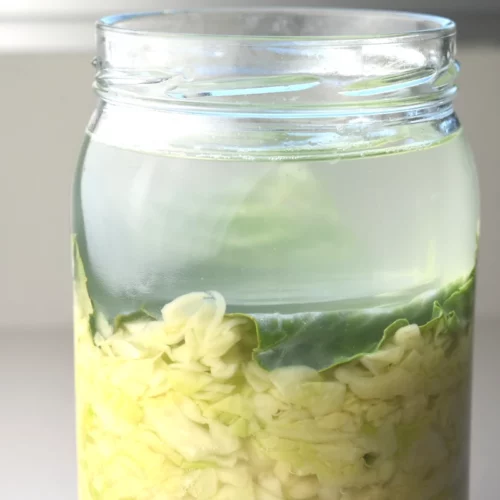
Cover the surface with the reserved cabbage leaf.
Ensure the liquid covers everything. Add a little salted water if necessary.
Important: If using a metal lid, place a cloth or film between the lid and the jar to prevent the salt from touching the metal.
-
Step 6: Labeling
Write the date on a label using a permanent marker. This is vital to track your progress.
In any fermentation process, patience is essential. Learn to wait, and you will appreciate the result even more.
-
Step 7: Wait patiently.
After one day, check for bubbles rising from the bottom, this is a great sign. After 10 days, you can taste it. If you aren’t in a hurry, leave it for 15 days or longer for a deeper flavor. Once you are happy with the taste, move the jar to the refrigerator to slow down the fermentation.
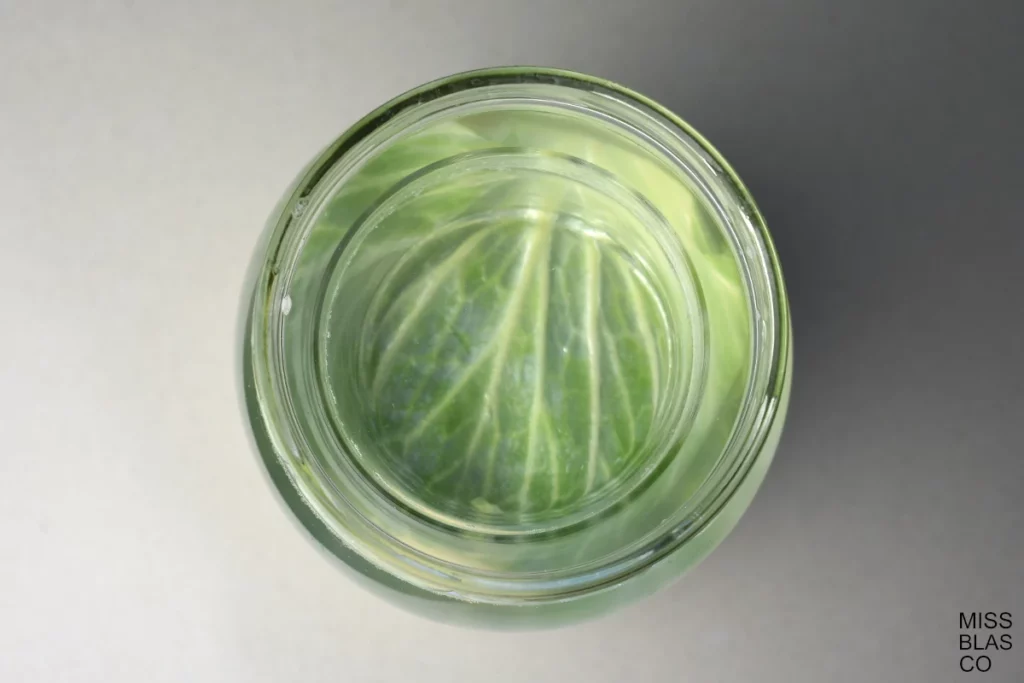
Don’t hesitate. Try making your own sauerkraut from almost nothing: a cabbage, salt, your expertise, and your patience. It’s a simple act of willpower that results in a true superfood.
Are you ready to start your first jar? Let me know in the comments how your first batch turns out!
Explore my full collection of probiotic recipes:
- How to Ferment Lemons
- How to Ferment Vegetables at Home
- How to Make Easy Kimchi
- How to Ferment Cucumbers
Sources:
- Wild Fermentation, Sandor E. Katz.
- The Art of Fermentation, Sandor E. Katz.
How to Make Sauerkraut at Home
Equipment
- Glass jars
- Wooden spoon
- Big bowl
Ingredients
- 5 lb Green Cabbage 1 large head (Approx. 1300g)
- 1 tbsp Sea Salt Approx. 1 leveled tablespoon + 1 teaspoon. (20g)
- Filtered Water Only if needed to cover the cabbage.
Instructions
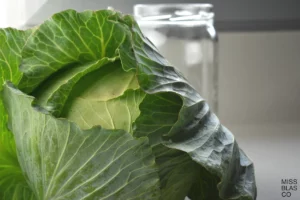
- Remove the outer leaves of the cabbage and set a few aside for later. Shred the cabbage into thin strips (julienne). Remove any thick, hard stems and save them for a vegetable cream or stock, never waste good nutrients!
- Place the shredded cabbage in a large bowl. Add the sea salt and begin to massage it thoroughly with your hands. Pro-tip: You may want to wear gloves to prevent the salt and cabbage juices from irritating your skin.
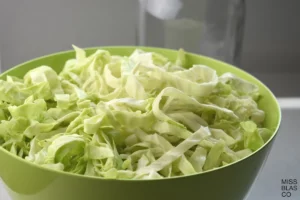
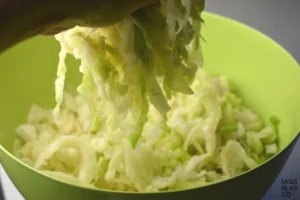
- Squeeze and massage the cabbage for 10–15 minutes. The goal is for the cabbage to "sweat." You will know it's ready when the texture softens significantly and you can see a good amount of natural juice at the bottom of the bowl.
- Pack the cabbage into very clean glass jars. Use a wooden utensil to press the cabbage down firmly toward the bottom. Ensure there are no air pockets and that the cabbage's own juice starts to cover the top.
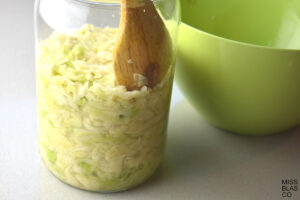
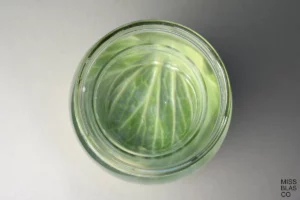
- Do not fill the jar to the very top; leave enough space for the liquid to rise over the cabbage. Place one of the reserved whole leaves on the top surface. Then, place a weight on top (a small glass jar filled with salted filtered water works perfectly) to keep everything submerged.
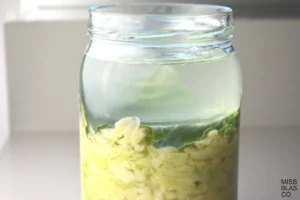
- Close the jar and let it rest in a cool, dark place.
- The First Signs: Within a day or two, you will see small bubbles forming, this means the fermentation has successfully begun.
- Burping: It is advisable to open the jars once a day to release the CO₂ gas generated by the process.
- Patience: Let it ferment for at least 15 days. You can start tasting it after day 10, but for the best probiotic profile and flavor, I recommend letting it mature longer.
Notes
BLOG, CHUCRUT, FERMENTATION, GUT HEALTH, LOW CARB, PROBIOTICS
Brittany
This recipe looks incredible! Would it work with other vegetables as well? Thank you for sharing!
missblasco
Hi Brittany, lactic acid fermentation is a preservative method suitable for vegetables and fruits, not only cabbage. Thanks for your comment! 😉
Laura
Me encantó gracias
missblasco
Hola Laura! Gracias a ti por visitar mi página. Me alegro de que te haya gustado. Saludos! 😉
Elizabeth
Fantástico!!! Muchas gracias ♥️
missblasco
Gracias a ti por leerlo Elizabeth! 😉
Ely
Muchas gracias!!! Excelente receta y enhorabuena por tu blog….te leo desde siempre!
missblasco
Hola Ely! Muchísimas gracias a ti! Gracias por tus palabras. 😉
YANNETH VEGA
El bote debe cerrarse herméticamente o se debe dejar un poco suelto para garantizar la salida del CO2
O sé tapa con un cedazo
Cómo es este proceso. Ya que es muy importante para evitar su contaminación.
missblasco
Hola, si el bote que usas es de vidrio hermético, deberás abrirlo cada día, al menos durante las dos primeras semanas, para que salga el CO2 que se vaya generando. Si usas un bote especial para fermentar, no deberás preocuparte porque están diseñados para permitir la salida del gas. Si el bote es de vidrio con tapa metálica, coloca un peso sobre la col, para que siempre esté sumergida, puedes verlo en las imágenes, después forra la tapa metálica con papel film o con tela, es fundamental que el metal no entre en contacto con la salmuera, puedes tapar el bote, pero como el cierre no es hermético, el CO2 irá saliendo.
Espero haber aclarado tus dudas.
Saludos!
Doris
Hola, muchas gracias por tu explicación excelente una pregunta la col o repollo que corta en julianas no ser lava? únicamente las hojas que se colocan encima o se deshoja y se lava una a una.Gracias por tu respuesta 🙏😊
missblasco
Hola Doris, las verduras siempre conviene lavarlas con agua antes de usarlas. Saludos! 😉
Mary
Durante los 10 a 15 días que dura la fermentación se debe guardar el recipiente en refrigeración? Después de dos días de iniciada la fermentación se debe destapar para liberar gas y también para probarlo, pero al momento de probarlo se va a mover la hoja grande y el líquido superior ingresará al resto de col, eso no afecta el proceso ya que también ingresa oxígeno? .
missblasco
Cuando la fermentación esté a tu gusto, lo guardas en el frigorífico, para probarlo solo levanta la hoja superior, la que hace de tapa saca un poco de col, si quieres que siga fermentando vuelve a poner la hoja como estaba, asegúrate de que todo sigue bien sumergido. Haz esto con cubiertos de madera limpios y manos bien limpias. Abrir el bote no afecta en nada mientras la col esté sumergida por completo.
Inmaculada
Gracias por todo lo que explicas y lo bien que lo haces.
La col se mete en el bote con el agua que ha soltado al masajearla?
missblasco
Hola Inmaculada, efectivamente, la col se envasa con el agua que suelta cuando la masajeas, si no llega a quedar totalmente cubierta, hay que añadir agua con sal para cubrirla del todo. Gracias a ti por leerme y por comentar! Saludos! 😉
Inmaculada
Se me olvidaron las estrellas!!!
missblasco
Muchísimas gracias! 😉
VIANEY MORENO
HOLA! CUANTO TIEMPO PUEDO TENERLA EN EL FRIGORIFICO? SOLO SE CONSUME LA COL O EL LIQUIDO TAMBIÉN? ES PARA HACERCE EN ENSALADAS?? PERDÓN ES LA PRIMERA VEZ QUE LEO ESTE ARTICULO 🙁
missblasco
Hola, una vez la col esté fermentada, te puede durar mucho tiempo en el frigorífico, lo mejor es que siga estando sumergida en la salmuera. Para mi gusto el líquido es demasiado salado, yo solo consumo la col, pero el líquido lo aprovecho para regar plantas ya que contiene muchas bacterias beneficiosas vivas.
Se puede tomar en ensaladas o como acompañamiento de carnes, pescados, legumbres, etc.
Espero haberte aclarado las dudas.
Gracias por comentar y saludos. 😉
Chemi
Buenas tardes tengo una duda puedo hacer una combinación de repollo con zanahoria y fermentar juntas ? O de varias verduras ? Las otras verduras también contienen probiótico como el fermentado de repollo ?
missblasco
Hola Chemi, sí, puedes combinar repollo con zanahoria, se pueden hacer muchas combinaciones, lo que hay que tener en cuenta es no mezclar dos tipos de verduras con tiempos de fermentación muy diferentes, por ejemplo, pepino y zanahoria, no es una buena combinación, la zanahoria aguanta más tiempo y el pepino en cambio, se fermenta en pocos días. Una combinación ideal es repollo, zanahoria, cebolla y nabo.
Respecto a la última pregunta, los probióticos se generan gracias al proceso de fermentación, a partir de los microorganismos presentes en las verduras, combinando verduras diferentes de distinta procedencia conseguirás un fermentado más rico, con mayor variedad de bacterias beneficiosas para tu organismo. Saludos;)
Vicente
Muy bien explicado. Saludos
missblasco
Muchas gracias por tu comentario Vicente. Saludos. 😉
belen
hola use una tapa plástica y lo abrí durante 5 o 6 días en forma diaria para ver que no tenga moho, note que ya no tiene liquido que lo cubra completamente, esta bien? debo agregar más salmuera? hice mal el proceso? no estoy segura de haberlo hecho bien y tengo miedo que abrirlo haya generado bacterias nocivas
missblasco
Hola, es importante que la col esté cubierta en todo momento, como explico en la entrada, si con su propio jugo no es suficiente, se puede añadir salmuera para cubrirla. El peligro es que si la col entra en contacto con el aire, por acción del oxígeno es fácil que se forme moho, de ahí que deba estar siempre cubierta. Saludos. 😉
Juanjo
Hola. Dónde están los nódulos en la col para preparar el Kéfir de agua mezclándolo con agua y azúcar e ir añadiendo periódicamente para tomar el líquido??
Gracias
missblasco
Hola Juanjo, en esta entrada explico cómo fermentar col en casa para obtener chucrut, sigo la técnica básica, en la que se fermenta la hortaliza o verdura con su propia agua o añadiendo salmuera al 20%.
Aquí no hablo de hacer kéfir de agua, los nódulos para hacerlo puedes comprarlos o que te los pase alguien, pero esa es otra receta difrente.
Saludos.
Beatriz
Hola, ante todo, muchas gracias.
Te escribo porque empecé a hacer el chucrut siguiendo tus explicaciones y bien. Peero, tengo un problema con el tema de los pesos. Yo uso botes reciclados, intentando mover la verdura cada dia para evitar el moho (por ensayo y error llegue ahi). No consigo que quede todo sumergido y no consigo pesas. Las he visto pero son carísimas. Podrías hacer sugerencia de qué utilizar que podamos tener por casa, o alguna pesa no muy cara?
Muchísimas gracias.
missblasco
Hola Beatriz, yo te sugiero que uses vasos de vidrio, de los bajos, lo ideal es llenarlos también de salmuera (o del líquido de fermentación si hay suficiente) y ponerlos encima de la col, sumergidos, y acabar de ejercer presión con la tapa, cada día abrir la tapa para que salga el gas y para asegurarte de que el vaso sigue sumergido. Si el bote es reciclado y la tapa es metálica, fórrala con un papel film, para asegurarte de que el metal no esté en contacto con la salmuera. Fíjate en la última foto de la entrada, la vista cenital, ahí se ve perfectamente a qué tipo de vaso me refiero. Espero haberte ayudado.
Gracias por tu comentario y por la valoración,
saludos!! 😉
Melania
Una pregunta, antes de guardar en la nevera el agua del frasco debe ser vaciada o se conserva el repollo en su propia agua???
missblasco
Hola Melania, el repollo ya fermentado (chucrut) debe conservarse en su propio jugo. Saludos 😉
Tatiana
Hola, hice el proceso hace 2 días pero al abrir el frasco al segundo día, salió con presión la salmuera. Y era algo efervescente.. Lave una cuchara de palo y baje con presión la col. No se si es normal que haya pasado eso. Help. Me!
missblasco
Hola, durante la fermentación se producen gases, cuando el proceso comienza se libera dióxido de carbono, son esas burbujitas que suben hacia la superficie, es algo normal, lo que debes tener en cuenta es que los vegetales van a querer flotar, y debes evitarlo, para una correcta fermentación, el alimento no debe estar en contacto con el oxígeno, debe estar siempre sumergido.
Has hecho bien bajando la col, debe mantenerse sumergida, pon un peso sobre ella, hay piezas diseñadas para eso, pero también puedes usar un vaso de vidrio bien limpio lleno de salmuera por ejemplo.
Espero haberte ayudado.
Saludos!
Anna
Good evening,
I have done many Sauerkrauts but they usually don’t last long. I gift them to friends and we eat what we have.
But I wanna store it longer and bigger amounts.
I tried to waterbath them, and 3 jars out of 4 broke.
Then I read I have to make an extra brine, boil, pour over and close.
That doesn’t seem right. Both don’t seem right.
So how do I preserve it without having my refrigerator filled with 8 or 10 jars 😊
I appreciate any advise and tricks
missblasco
Hi Anna!
The only way I know to preserve sauerkraut for a long time is in the fridge, even so, check it out regularly, because mold could appear.
So yes, you need extra room in your fridge or a cold dry place to store the jars.
Adding brine or waterbath the jars is not right. The sauerkraut’s nutritional benefits could be changed.
Regards,
Francesca 😉
Jesús
Muchas gracias por la receta.
Lo he intentado tres veces y siempre me sale moho pese a tener un tarro especial con pesos y mantener el líquido por encima. Hay algún truco o algo para evitar la aparición de moho. He visto el tema de las tapas airlock pero no se si esa es la solución.
Gracias
missblasco
Hola Jesús, se me ocurren varias cosas por las que podría estar sucediendo esto.
Por un lado la relación temperatura-tiempo, si la temperatura en el sitio donde guardas los tarros de col es demasiado alta, es posible que estés fermentando durante demasiado tiempo, redúcelo o asegúrate de guardar los tarros en un lugar más fresco. (Recuerda: A mayor temperatura ambiental, menor tiempo de fermentación y viceversa).
La humedad también juega en contra de la fermentación, lo ideal es guardar los tarros en un ambiente seco.
Otra posible causa sería que la col entre en contacto con el oxígeno, pero como comentas que la mantienes sumergida, la descarto.
También he de decir que la aparición de una capa blanca en la superficie del líquido de fermentación, suele ser levadura, son como pequeñas burbujitas blancas, que no es peligrosa, pero hay que saber distinguirla del moho, si es levadura se puede retirar y seguir fermentando, aunque es probable que vuelva a aparecer, así que debes estar alerta.
El moho suelen ser estructuras ramificadas, al principio blancas y después cambian de color, se vuelven grises, verdosas o más oscuras. Si aparece moho, hay que tirarlo todo.
El olor también es una buena guía, con moho se vuelve desagradable y es una señal inequívoca de que hay que desechar el fermentado.
Espero que estos comentarios te ayuden.
Salidos cordiales,
Francesca.
Dora Mendez
Recién elaboré la receta , mi frasco no tiene tapa, le coloque una gasa con liga y lo metí en un sitio cerrado como un closet de madera. Por favor espero su respuesta . Graciad
missblasco
Por higiene debería estar tapado, eso sí, con una tapa que permita que respire o abriendo la tapa cada 24 horas para permitir que los gases generados por la fermentación salgan.
Saludos y gracias por tu comentario y valoración. 😉
Rosa
Hola! Ayudaaaa; lo hice y antes de los 15 dias, le aparecieron unas puntitos blancos; y me da temor consumirlo. Gracias por tus consejos
missblasco
Hola Rosa, eso puede ser perfectamente normal, pero lo cierto es que sin verlo no te puedo asegurar que pasó. Lee en los comentarios porque a muchas más gente le pasó igual. Un saludo y gracias por comentar.
Adam
Hi, some experts say you should ferment the cabbage around 7 days, then put in the fridge and consume it as soon as possible because after de 7 days the beneficial bacteria starts to die and increase the biogenic amines (which reacts to nitrites developing nitrosamines ). Also is a mistake to add saltwater. By the way, some people recommend to use a cloth or a fabric coffee filter with an elastic band instead a lid and this way you don’t have to open it to gas comes out. Others people recommend don’t lock the lid the first 3 days because some liquid spills, after that you can lock the jar and open daily to gas comes out.
missblasco
Hi Adam, thanks for your comments. If you want to get trustly information about fermentation, I recommend the following book: “Wild Fermentation”, Sandor E. Katz.
Adam
Thank you!!! By the way, I found that Fido jars and Kilner jars are a great option for fermenting
ARMANDO
Una excelente explicación muy bien detallada. He comenzado a realizar el CHUCRUT y creo me ha salido correcto con tus comentarios. Lo he apretado con las manos con un 2% del peso del repollo y ha empezado a salir el líquido de la col, a continuación lo he colocado en un frasco de cristal de un envase reciclado de pepinillos con cebollitas MIX de Mercadona, antes pasado por el friegaplatos lo que quedó perfectamente limpio. Un REPOLLO de 1,0 kgs ha entrado perfectamente en dos de esos recipientes, hago mención a esos recipientes porque son perfectos con otros GUINDILLAS de RIOVERDE donde ambos son prácticamente cilíndricos encajando casi como un pistón en su cilindro, lo digo porque con este sistema llenando el frasco de las guindillas con agua se tiene el peso sobre el repollo que se quiera, es muy practico para aquellos que deseen fabricar el CHUCRUT habitualmente. Es cierto que todo el repollo queda sumergido aunque el frasco del MIX queda abierto. No se si eso es conveniente o no pero es cierto que no he tenido problemas con posibles apariciones de moho o fermentaciones indebidas. Aparte de mi explicación no se si es correcto o no el haber dejado abiertos esos frascos para la formación correcta de la fermentación o estoy equivocado.
Gracias por la atención y muy agradecido por el entusiasmo y dedicación que realizas para informar de un proceso beneficioso para todos.
missblasco
Hola Armando, veo que tienes tu técnica muy depurada, yo te aconsejaría tapar los frascos, por ejemplo con papel film al que le puedes hacer unos orificios pequeños para permitir la salida de los gases que se generan durante la fermentación, o con la propia tapa del frasco forrada de film, para que la superficie metálica no entre en contacto con el líquido de fermentación, y teniendo en cuenta que se deben abrir una vez al día. Taparlo es importante para evitar una posible contaminación exterior, o que entre algún pequeño insecto.
Saludos y muchas gracias por tu comentario.