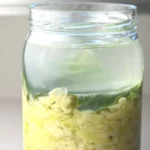
How to Make Sauerkraut at Home
How to make sauerkraut at home with this easy step-by-step guide. Learn the science of lactic fermentation.
Servings 12 portions
Calories 47kcal
Equipment
- Glass jars
- Wooden spoon
- Big bowl
Ingredients
- 5 lb Green Cabbage 1 large head (Approx. 1300g)
- 1 tbsp Sea Salt Approx. 1 leveled tablespoon + 1 teaspoon. (20g)
- Filtered Water Only if needed to cover the cabbage.
Instructions
- Remove the outer leaves of the cabbage and set a few aside for later. Shred the cabbage into thin strips (julienne). Remove any thick, hard stems and save them for a vegetable cream or stock, never waste good nutrients!
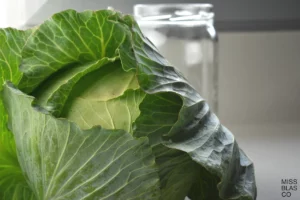
- Place the shredded cabbage in a large bowl. Add the sea salt and begin to massage it thoroughly with your hands. Pro-tip: You may want to wear gloves to prevent the salt and cabbage juices from irritating your skin.
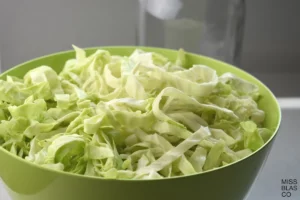
- Squeeze and massage the cabbage for 10–15 minutes. The goal is for the cabbage to "sweat." You will know it's ready when the texture softens significantly and you can see a good amount of natural juice at the bottom of the bowl.
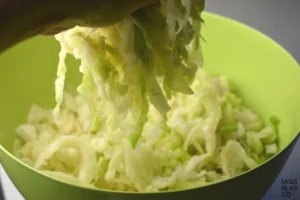
- Pack the cabbage into very clean glass jars. Use a wooden utensil to press the cabbage down firmly toward the bottom. Ensure there are no air pockets and that the cabbage's own juice starts to cover the top.
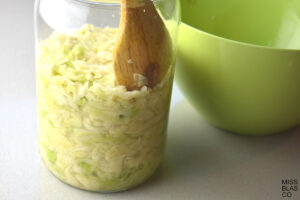
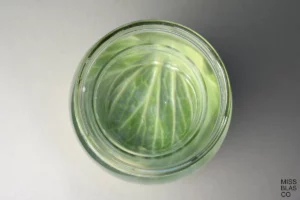
- Do not fill the jar to the very top; leave enough space for the liquid to rise over the cabbage. Place one of the reserved whole leaves on the top surface. Then, place a weight on top (a small glass jar filled with salted filtered water works perfectly) to keep everything submerged.
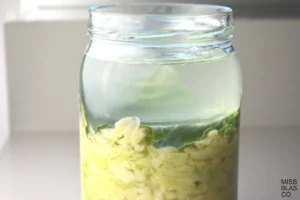
- Close the jar and let it rest in a cool, dark place.
- The First Signs: Within a day or two, you will see small bubbles forming, this means the fermentation has successfully begun.
- Burping: It is advisable to open the jars once a day to release the CO₂ gas generated by the process.
- Patience: Let it ferment for at least 15 days. You can start tasting it after day 10, but for the best probiotic profile and flavor, I recommend letting it mature longer.
Notes
Mastering the art of sauerkraut is the first step toward a probiotic-rich kitchen. This recipe uses "wild fermentation" to transform a humble cabbage into a powerhouse of digestive enzymes and beneficial bacteria.
Nutrition
Calories: 47kcal | Carbohydrates: 11g | Protein: 2g | Fat: 0.2g | Saturated Fat: 0.1g | Polyunsaturated Fat: 0.03g | Monounsaturated Fat: 0.03g | Sodium: 615mg | Potassium: 321mg | Fiber: 5g | Sugar: 6g | Vitamin A: 185IU | Vitamin C: 69mg | Calcium: 76mg | Iron: 1mg