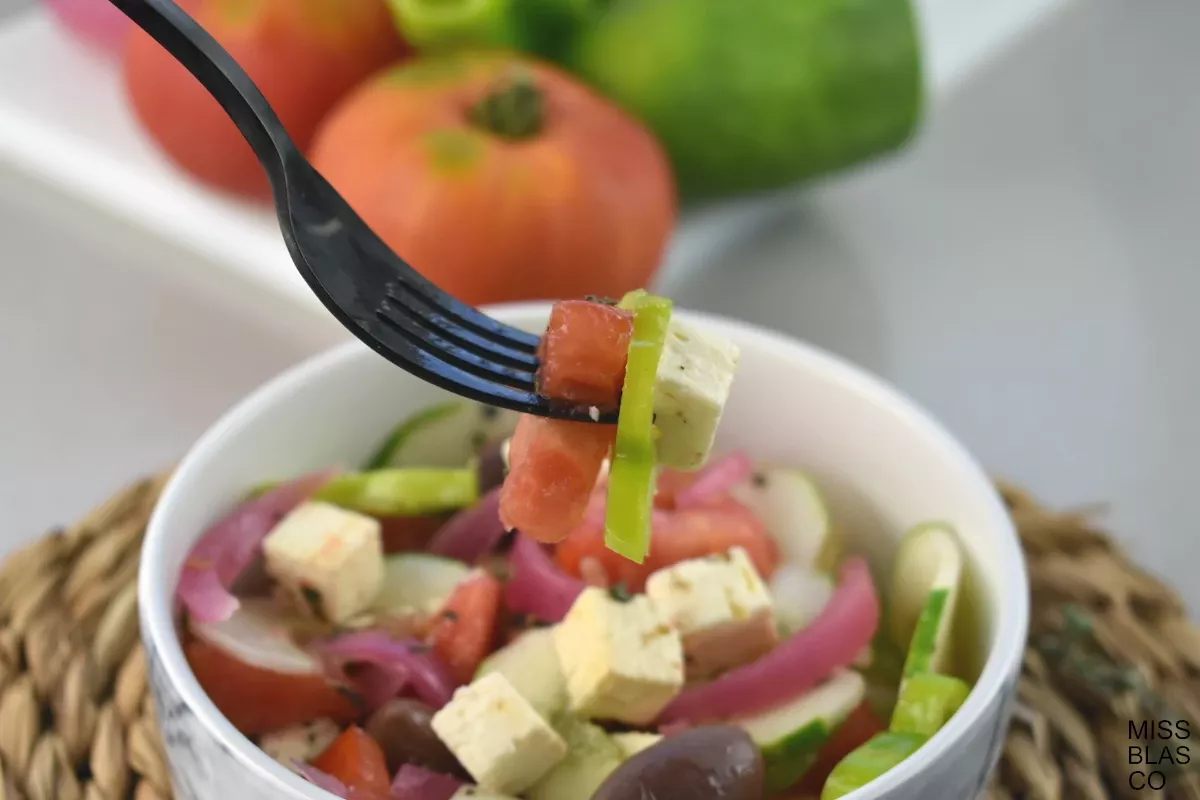
Easy Greek Salad Recipe
Why the Greek Salad is a Nutritional Masterpiece
In the realm of clinical nutrition, we often search for the perfect balance between high palatability and metabolic benefit. When a dish manages to be both a “wardrobe staple” of the kitchen and a powerhouse of essential macronutrients, it deserves a permanent place in your dietary repertoire. The Greek Salad is precisely that: a fresh, vibrant, and incredibly easy basic recipe that serves as the perfect accompaniment to grilled meats and fish.
Whether you are hosting a summer barbecue or preparing a simple mid-week meal of grilled sardines, this salad provides the necessary contrast to heavier proteins. It is more than just a side dish; it is a meticulously balanced combination of textures and flavors that supports cardiovascular health and provides essential fat-soluble vitamins.
The Soul of the Dish: Quality Ingredients
The preparation of a Greek Salad is deceptive in its simplicity. Because there is no cooking involved, the nutritional value and flavor profile depend entirely on the quality of your produce and the way each ingredient is handled.
- Feta Cheese: This is the soul of the dish. As a nutritionist, I recommend sourcing high-quality, authentic feta. It provides the creamy texture and salty punch that defines the recipe.
- Tomatoes: Look for vine-ripened tomatoes at their peak. They should be firm yet juicy, providing a base of Vitamin A and C.
- Kalamata Olives: These dark, almond-shaped olives originate from the Peloponnese peninsula in Greece. They are not merely a garnish; they are a vital source of monounsaturated fats.
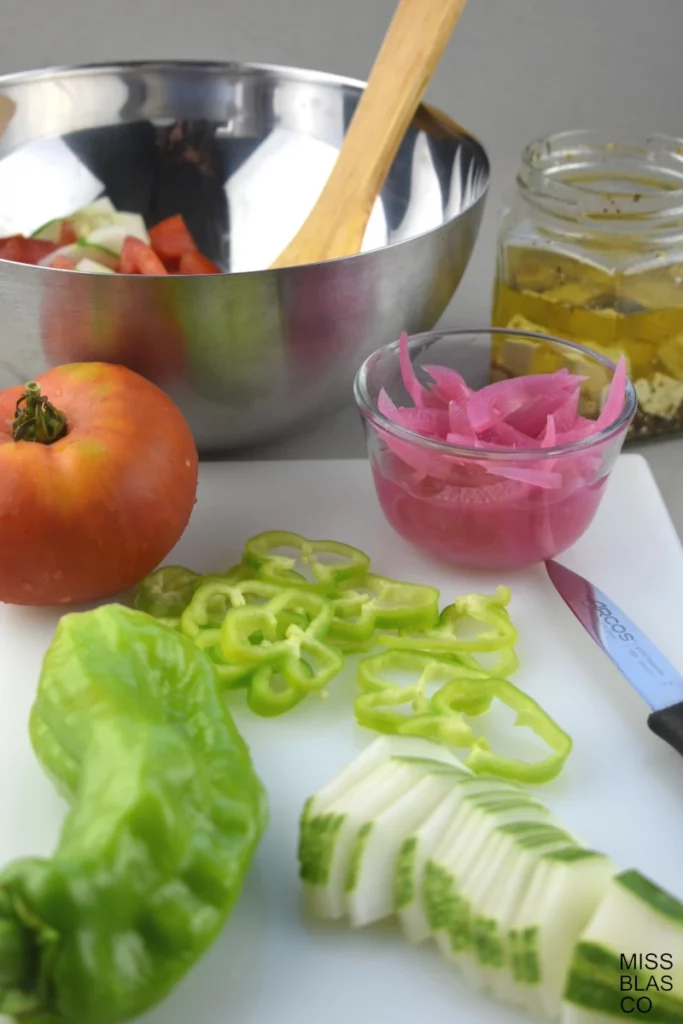
- The Crunch: Cucumber and green peppers add essential water content and dietary fiber, while red onion, especially when fermented, adds a probiotic element to the plate.
The Greek Salad is a functional “wardrobe staple” for the kitchen, offering a perfect balance of hydration, healthy fats, and antioxidants.
Understanding Dietary Fats: Quality Over Calorie Counting
Fats are perhaps the most maligned macronutrient in modern history, yet they are essential for human health. While all fats provide 9 kcal per gram, their chemical structures dictate very different effects on your physiology. In a Greek Salad, we find a sophisticated blend of these structures.
The Classification of Fats
To understand why this salad is so beneficial, we must quickly review the four types of dietary fats:
- Monounsaturated Fats: Found in abundance in extra virgin olive oil (EVOO) and Kalamata olives.
- Polyunsaturated Fats: Found in nuts, seeds, and fatty fish like wild salmon.
- Saturated Fats: Found in red meat, full-fat dairy, and coconut.
- Trans Fats: Predominantly found in ultra-processed foods (these should be avoided).
The Power of Monounsaturated Fats
The Greek Salad is a celebration of unsaturated fats. Both monounsaturated and polyunsaturated fats promote cardiovascular health by improving cholesterol profiles and reducing inflammation. By pairing your grilled proteins with EVOO and olives, you are facilitating the absorption of fat-soluble nutrients from the vegetables.
The Role of Saturated Fats in a Balanced Diet
The saturated fat in this recipe comes primarily from the feta cheese. While saturated fats have been unfairly demonized in the past, they play a crucial role in a professional nutritional plan.
Full-fat dairy products like feta are rich in Vitamins K1 and K2, which are fat-soluble and vital for bone health and calcium metabolism. Furthermore, full-fat dairy is highly palatable and provides a sense of satiety that low-fat alternatives cannot match. When you choose “light” or fat-free dairy, you lose these essential vitamins and the amino acids that support muscle maintenance.
Monounsaturated fats from Kalamata olives and extra virgin olive oil are essential for cardiovascular protection and cellular health.
A Vitamin and Mineral Powerhouse
Beyond the healthy lipid profile, the Greek Salad is a dense source of micronutrients. Each vegetable contributes a specific set of tools for your body:
| Ingredient | Primary Nutrients | Health Benefit |
| Tomato | Vitamin A, C, Potassium | Immune support and blood pressure regulation |
| Cucumber | Folates, Potassium, Phosphorus | Hydration and DNA synthesis |
| Green Pepper | Vitamin C, Phosphorus | Antioxidant protection and bone health |
| Fermented Red Onion | Natural Probiotics | Gut microbiome support |
I particularly recommend using lacto-fermented red onions. By fermenting the onions, you introduce beneficial bacteria (probiotics) into the meal, which aids in digestion and strengthens the intestinal barrier.
High-quality feta cheese provides necessary saturated fats and fat-soluble vitamins (K1 and K2) that are often missing from low-fat diets.
To master this recipe, pay attention to the dressing. A simple vinaigrette based on extra virgin olive oil and sherry vinegar is all you need. The acidity of the vinegar helps to “cut” through the richness of the feta cheese, while the oil ensures that the lycopene in the tomatoes is fully absorbed by your body.
If you are following a specific nutritional protocol, remember that this salad is naturally low-carb and gluten-free, making it an excellent choice for a wide variety of metabolic needs.
The Greek Salad is a summer classic that never fails to satisfy. Have you tried using fermented onions in your salads? I would love to hear your thoughts on this version and your favorite pairings for a summer barbecue in the comments below.
Explore More Nutrient-Dense Recipes
Easy Greek Salad Recipe
Ingredients
- Classic Greek Salad
- Ingredients
- 2 medium vine tomatoes approx. 9 oz
- 1 medium cucumber approx. 10 oz
- 1 green bell pepper or Italian long pepper (not spicy), approx. 2 oz
- 1/4 cup fermented red onion approx. 1.5 oz. Pro tip: If you don't have fermented onions, you can macerate sliced red onions in salt and a splash of vinegar for 10 minutes, or use fresh green onions.
- 2 oz high-quality feta cheese
- 20 Kalamata olives
The vinaigrette:
- 4 tbsp extra virgin olive oil EVOO
- 1 tbsp apple cider vinegar or fresh lemon juice
- 1 tsp Dried herb blend oregano, thyme, basil, and mint
- 1 pinch Sea salt
Instructions
- Prep the vegetables: Cut the tomatoes into bite-sized wedges. Slice the cucumber into thin rounds. Remove the seeds from the green pepper and slice it into thin rings. Thinly slice the red onion into half-moons (julienne).
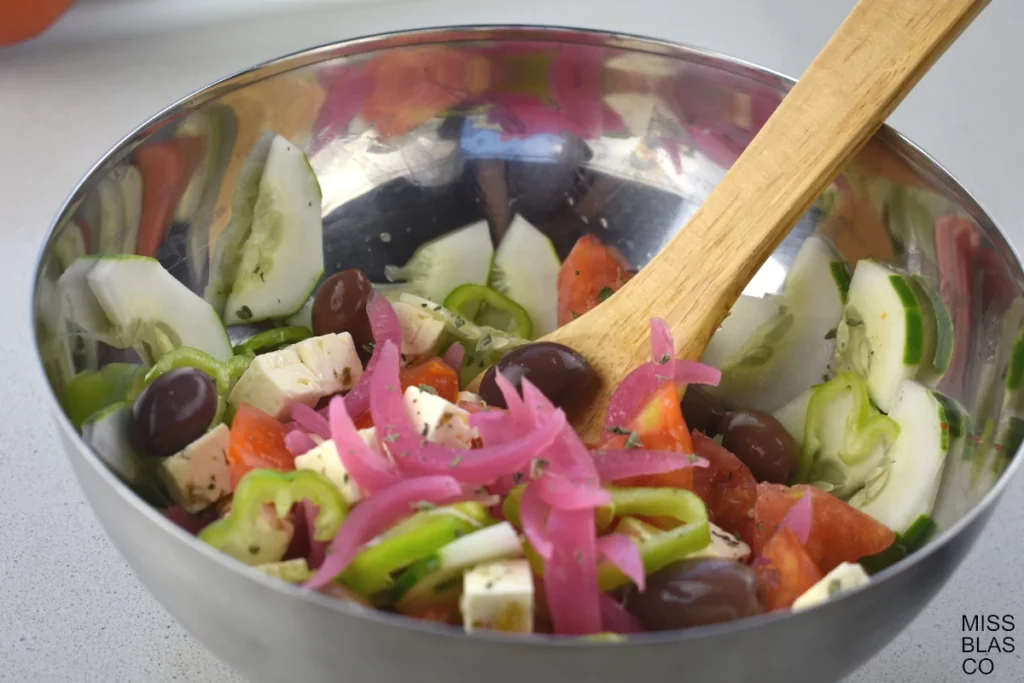
- Combine the base: In a large mixing bowl, toss the tomatoes, cucumber, green pepper, and onion together.
- Add the stars: Gently fold in the cubed feta cheese and the whole Kalamata olives.
- Whisk the vinaigrette: In a small jar or bowl, whisk together the extra virgin olive oil, sherry vinegar (or lemon juice), and the dried herbs. Add a pinch of sea salt to taste.
- Serve: Drizzle the vinaigrette over the salad immediately before serving to maintain the crispness of the vegetables.
Delfín López
Te felicito por el contenido y lo ameno de las publicaciones. Llegué aquí hace unas semanas y se ha convertido en mi blog de cabecera para conseguir recetas e indicaciones sobre hábitos saludables en alimentación. Recomiendas algún website para informarse del contenido nutricional de los alimentos? Gracias por la atención y seguiré disfrutando de las publicaciones
missblasco
Hola Delfín,
no sabes la alegría que me das, me alegro mucho de que haya personas que valoren mi esfuerzo.
Puedo recomendarte 2 webs que ofrecen información nutricional, hay muchas más, pero estas son las que yo suelo consultar.
Por un lado, en español, la base de datos española de composición de alimentos, BEDCA: https://www.bedca.net/bdpub/index.php Si entras a través de este enlace, tienes en la parte superior derecha el botón de “consulta”, para buscar los alimentos por orden alfabético.
Y en inglés, la US Food database: https://fdc.nal.usda.gov/index.html Esta web está muy bien hecha y es muy intuitiva, solo introduce el nombre del alimento en el buscador (en inglés), y te aparecerán todas las opciones.
Espero que esta info te ayude, gracias por tu comentario y saludos cordiales.
Francesca. 😉
Franklin
La ensalada griega es una de mis ensaladas favoritas. Su combinación de pepino fresco, tomates jugosos, cebolla roja, pimiento verde, aceitunas y queso feta es simplemente deliciosa. Me encanta su sabor fresco y mediterráneo, y es perfecta para acompañar platos de carne o pescado a la parrilla. Además, es una ensalada muy saludable y nutritiva, rica en vitaminas y antioxidantes. Definitivamente recomiendo probarla en casa o en un restaurante griego auténtico.
missblasco
Muchas gracias por tu comentario.
Saludos! 😉