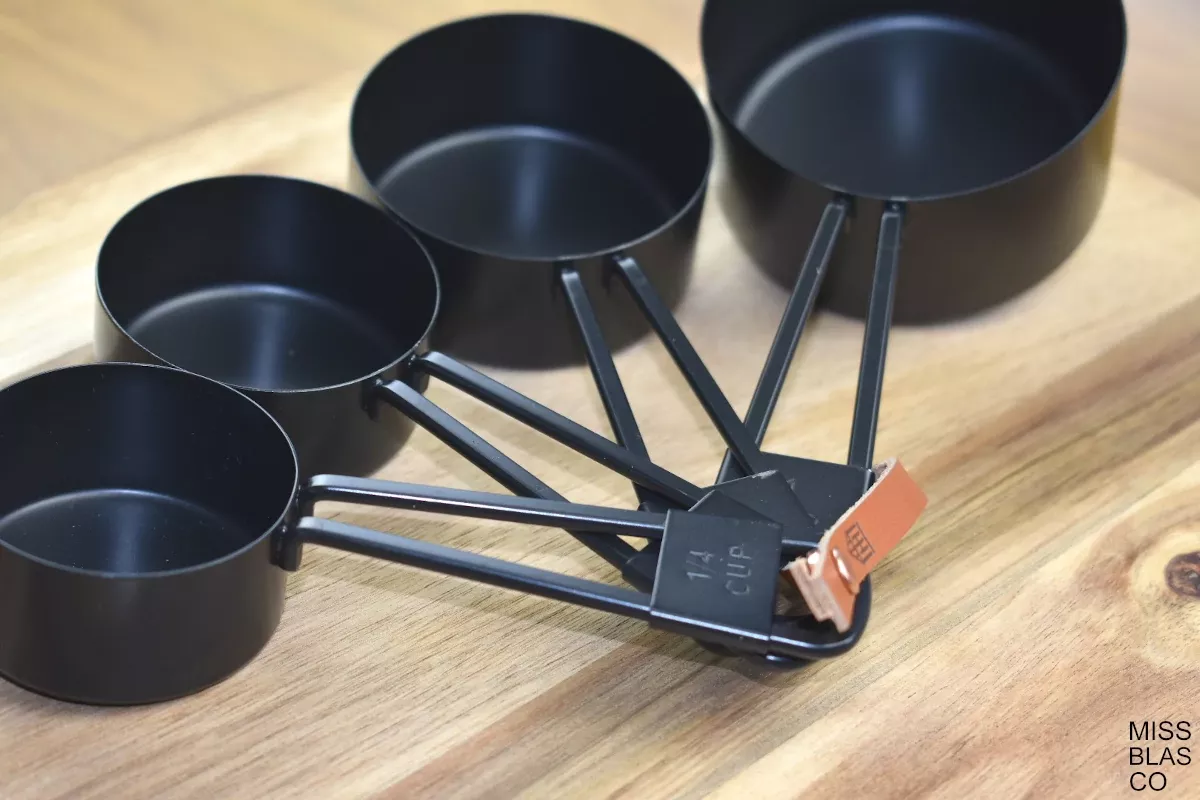
Measuring Spoons and Cups
Demystifying Measuring Spoons and Cups: The Ultimate Guide to Volume Baking
Cups, spoons, teaspoons… It’s definitely time to clarify what kind of measurements I usually use in my kitchen. Over the years, many of my readers have asked me about the specific tools I use to develop my recipes, and you absolutely deserve a thorough explanation.
If you have ever felt intimidated by Anglo-Saxon recipes or wondered how to accurately convert a “cup” into milliliters or grams, this guide is for you. Shifting from a strict weight-based mindset to volume measuring can feel like learning a completely new culinary language, but once you unlock its simplicity, it will transform the way you cook and bake.
My Journey to Volume Measurements
To begin with, I want to share a confession: when I first started cooking, being very inexperienced, I used to prepare recipes completely “by eye.” Like many home cooks, I relied on improvised, casual measurements, a “glass of this” or a “coffee mug of that”, completely leaving the crucial question of what type of glass or cup in the background.
You can probably imagine how well everything turned out for me back then! Baking is a science, and guesswork rarely yields a perfect soufflé or a perfectly moist loaf of bread. Little by little, I learned the importance of organization, mastering the art of mise en place—preparing and measuring all the ingredients I needed for a specific recipe well in advance. Because I am entirely self-taught, this trial-and-error process took some time.
My first real step toward precision was acquiring a standard liquid measuring cup and a digital kitchen scale. These two objects allowed me to measure by volume and weight respectively, which was undoubtedly a massive improvement. I began writing down the exact quantities of everything I used to prepare each dish, slowly building my personal recipe archive.
Then, one day, completely by chance while browsing international cooking websites, I truly discovered the Anglo-Saxon system of measurement.
Standardized volume measurements offer ultimate kitchen convenience, allowing you to replicate professional recipes seamlessly without pulling out a kitchen scale.
The Shift to Measuring Spoons and Cups
For a long time, I had been reading American cooking blogs, nutritional websites, and British recipe forums. At first, every time I read the word “cup,” I thought of a standard mug. But as I mentioned before, I didn’t pay attention to the standardized volume of that cup. When I read “tablespoon,” I automatically pictured a standard soup spoon from my silverware drawer, completely unaware of whether the recipe meant a soup spoon, a dessert spoon, or a coffee spoon.
After a few ruined batches of baked goods, I realized that this lack of precision made no sense. I started researching and quickly uncovered a beautifully standardized measurement system used universally across the English-speaking world. I saw how incredibly convenient it was, and I knew instantly that I couldn’t continue my culinary journey without a proper set.
Back then, standard American measuring cups and spoons weren’t easily available in Spain, at least not in my local area. I eagerly waited until my next trip to the United States to purchase my very first high-quality set. Today, thankfully, globalization makes things much easier. You can find them online or in the kitchenware section of almost any home goods store for a very small investment.
Understanding the System: Volume vs. Weight
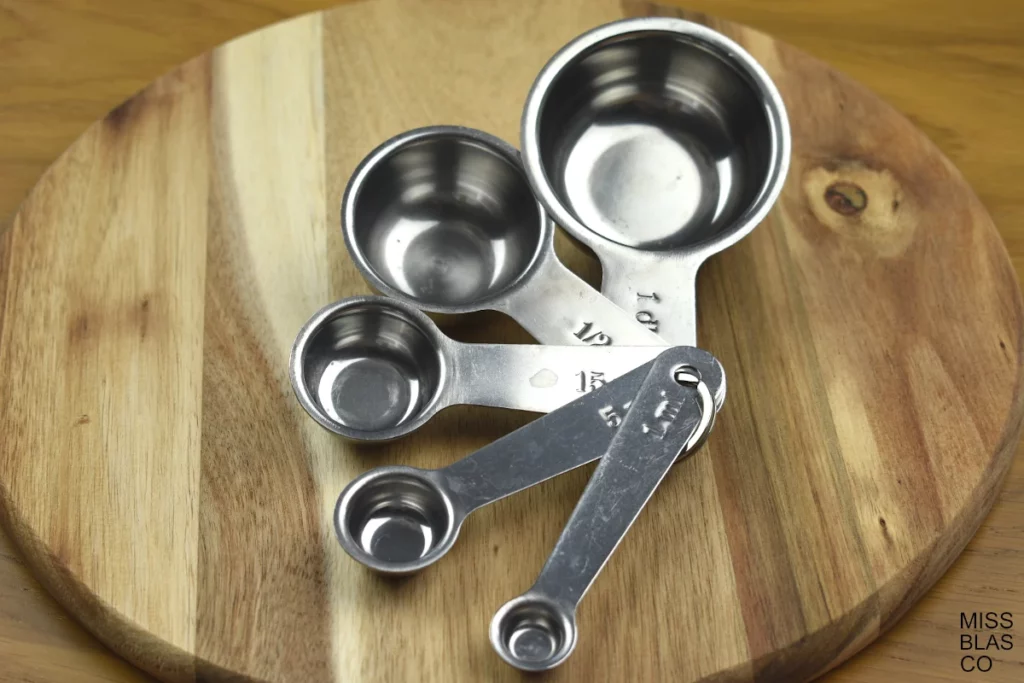
Today, I own several sets of measuring cups and spoons collected from various travels. I even have a set from Ikea, which are adapted slightly to the European decimal metric system (250ml for a cup), whereas a traditional US cup is about 240ml. While they differ by a mere fraction, they perform the same fantastic function.
To help clear up any confusion, let’s look at how this system breaks down for liquid ingredients. Liquids are highly predictable because their volume directly correlates to fluid ounces and milliliters.
Measuring by volume is highly intuitive, making recipe memorization effortless and reducing cleanup time significantly.
Tablespoons (Tbsp) and teaspoons (Tsp):
| 1/4 Tsp | 1.25ml |
| 1/2 Tsp | 2.50ml |
| 1 Tsp | 5ml |
| 1/2 Tbsp | 7.4ml |
| 1 Tbsp | 15ml |
Cups:
| 1/4 cup | ∼ 60ml |
| 1/3 cup | ∼ 80ml |
| 1/2 cup | ∼ 120ml |
| 1 cup | ∼ 240ml |
The Complexity of Dry Weights
If we want to translate these volumes into grams for dry ingredients, things get a bit more complicated. Volume measures space, while a scale measures mass.
For example, the exact same volume of whole wheat flour and finely ground almond flour will not weigh the same on a scale. Almond flour is denser and contains more natural oils, meaning 1 level tablespoon of almond flour is heavier than 1 level tablespoon of traditional white flour. This density variance is precisely why translating a recipe designed exclusively in grams into cups and spoons requires meticulous kitchen testing.
To bridge the gap between cups and spoons within the volume system itself, I’ve put together this quick, handy reference table:
Cups, Tablespoons and Teaspoons |
||
| CUPS | TBSP | TSP |
| 1/4 cup | 4 | 12 |
| 1/3 cup | 5 | 16 |
| 1/2 cup | 8 | 24 |
| 3/4 cup | 12 | 36 |
| 1 cup | 16 | 48 |
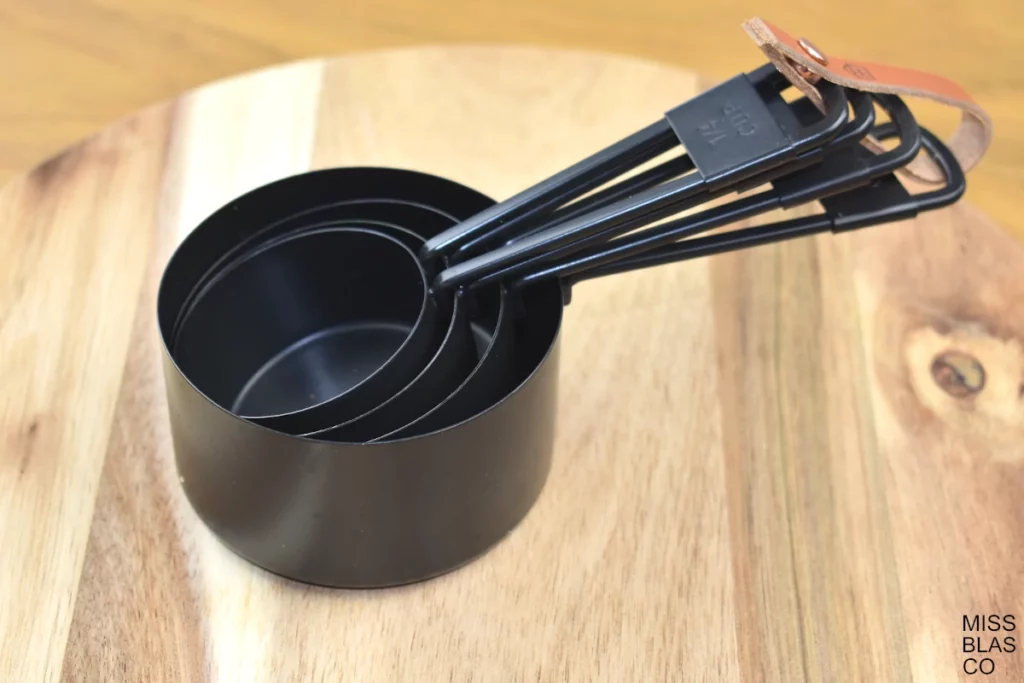
A level spoonful ensures absolute accuracy, consistency in your measuring technique guarantees consistency in your baking results.
Golden Rules for Using Measuring Tools
To get the absolute best results from your tools, keep these essential practices in mind:
- Always Level Your Scoops: When a recipe calls for a tablespoon or a cup of a dry ingredient, always level it off flat with the back of a knife. Packing flour or leaving a rounded dome completely alters the chemistry of the recipe.
- Choose the Right Materials: I highly recommend food-grade stainless steel sets. They are incredibly durable, won’t warp in the dishwasher, and last a lifetime. Plastic sets are also highly practical and budget-friendly.
- Avoid Decorative Materials for Daily Use: Ceramic or painted decorative spoons look stunning in food photography and blog headers, but they can chip easily and are often not accurately calibrated for precise cooking.
Why You Should Make the Switch
Embracing volume measurements brings immense regularity to your kitchen. Your favorite healthy desserts, savory sauces, and baked goods will turn out exactly the same way every single time. It completely eliminates the need to drag out a heavy kitchen scale, makes cleanup a breeze, and allows you to adjust spices seamlessly (down to a tiny 1/8 tsp, which is considered a standard “pinch”).
I hope this guide helps you navigate my recipes with total confidence. Are you already using measuring cups and spoons in your daily cooking routine, or are you ready to pick up your very first set?
Let me know your thoughts in the comments below.
Mamen
Quiero comprar ar las tazas medidoras, pero la medida de las españolas, no coincide con las anglosajonas,. Me puedes decir, dónde puedo comprar las anglosajonas.
Gracias.
missblasco
Hola! Mamen, yo las he visto aquí en España en varias grandes superficies (Carrefour, El Corte Inglés), en la sección de menaje, en la zona de repostería, con las medidas anglosajonas. Y por supuesto, si conoces alguna tienda que se dedique exclusivamente al menaje de cocina, las tienen seguro.