How to ferment vegetables at home
If the word “fermentation” sounds like something distant or overly technical, stay with me. In reality, fermentation is an everyday miracle that has been a constant in human nutrition throughout history.
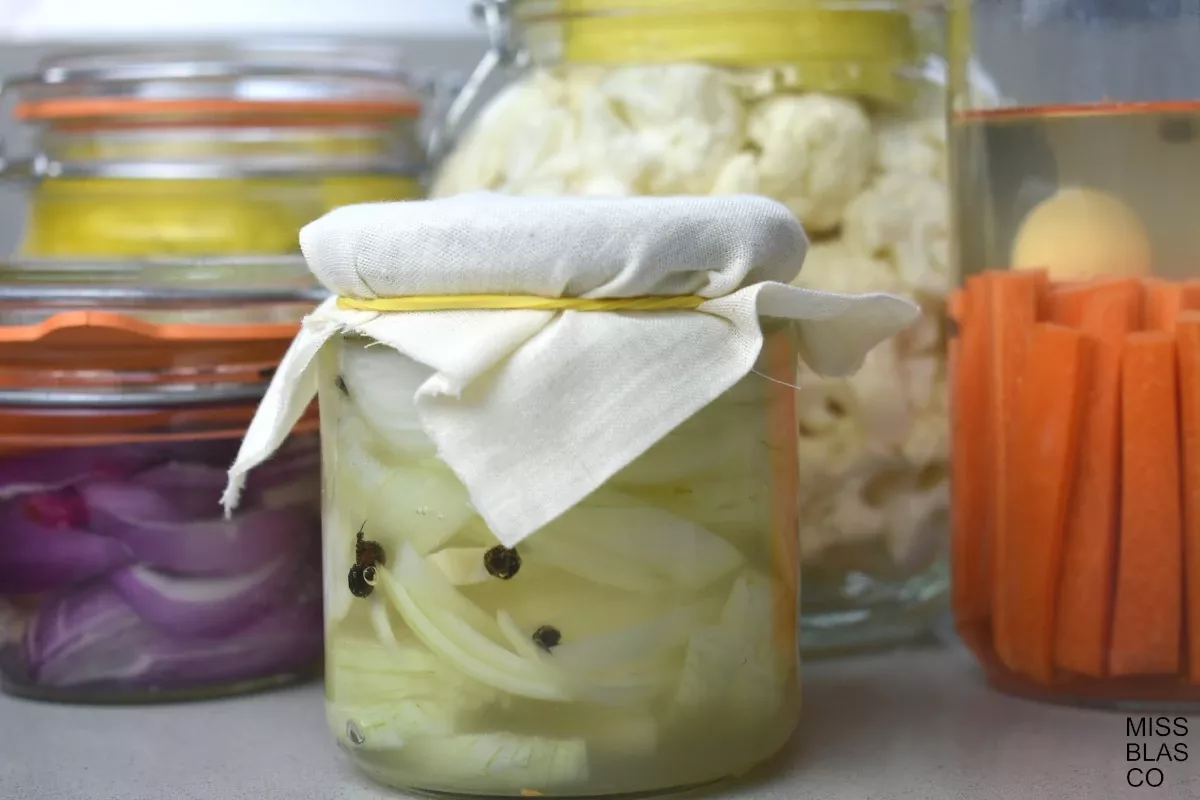
In this post, I want to show you how to ferment vegetables at home, cabbage, carrots, onions, cucumbers, cauliflower, tomatoes, and more. It is a simple process that anyone can master, and it brings transformative benefits to our modern diet.
The History of a Vital Technique: From Ancient Egypt to Your Kitchen
Fermenting is, at its core, a way of transforming food so it can be preserved for much longer periods. Before refrigerators and global supermarkets, humanity relied on fermentation and dehydration, the two oldest preservation techniques, to survive the winter.
- Ancient Civilizations: We have records of beer in Egypt and fermented cabbage in the 3rd century BC in China (Qin Dynasty).
- The Roman Empire: Romans were masters of fermentation, from wine to the famous garum, a fermented fish sauce that provided the “fifth flavor” or umami.
- Global Survival: In the 18th century, long sea voyages were made possible because sailors carried large quantities of fermented cabbage (sauerkraut) to prevent scurvy, thanks to its high vitamin C content.
Fermentation and dehydration are the two oldest preservation techniques in human history, turning seasonal harvests into year-round medicine.
Why Fermented Vegetables Are Superior to “Store-Bought”
In the supermarket, you will find many “pickled” or “fermented” foods. But be careful! To ensure a long shelf life, these products are often pasteurized.
Pasteurization (discovered in the mid-19th century) uses high temperatures to eliminate pathogens. While this was a breakthrough for food safety, it is a disaster for probiotics. Heat destroys the very beneficial microorganisms that we want to ingest.
When you ferment at home, you consume live microbes. This is the key to enriching your intestinal microbiota. By doing it yourself, you avoid the loss of these “friendly” bacteria and enjoy a food that is nutritionally and organoleptically superior.
The Nutritional Power of Lactic Acid Bacteria
Today, science confirms what our ancestors knew instinctively: fermented vegetables are a powerhouse of lactic acid bacteria (like Lactobacillus).
These live microorganisms act as natural probiotics. When we consume them, we are:
- Improving Digestive Health: They help balance the internal ecosystem.
- Increasing Diversity: A diverse microbiota is the foundation of a strong immune system.
- Creating Symbiosis: When you combine these probiotics with prebiotics (like garlic, leeks, or onions), you create a symbiotic environment that is exceptionally healthy for your gut.
Fermented vegetables provide essential lactic acid bacteria that are vital for improving and diversifying our intestinal microbiota.
Freedom in the Kitchen: Everything Can Be Fermented
One of the most beautiful aspects of fermentation is the freedom it gives you. I am not an expert, but I am not afraid to experiment, and I encourage you to do the same.
While Sauerkraut is the easiest place to start (only cabbage and salt), once you master the technique, a world of flavors opens up:
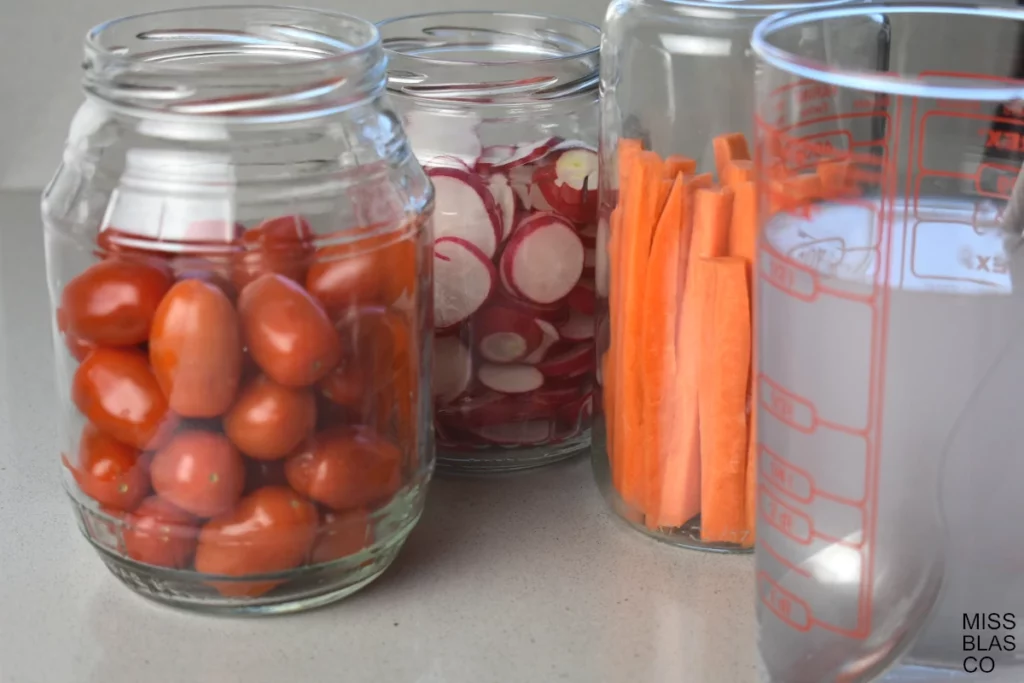
- Cherry Tomatoes: They add an incredible pop of flavor to salads.
- Fermented Onions: They become much more digestible and lose their sharp “bite.”
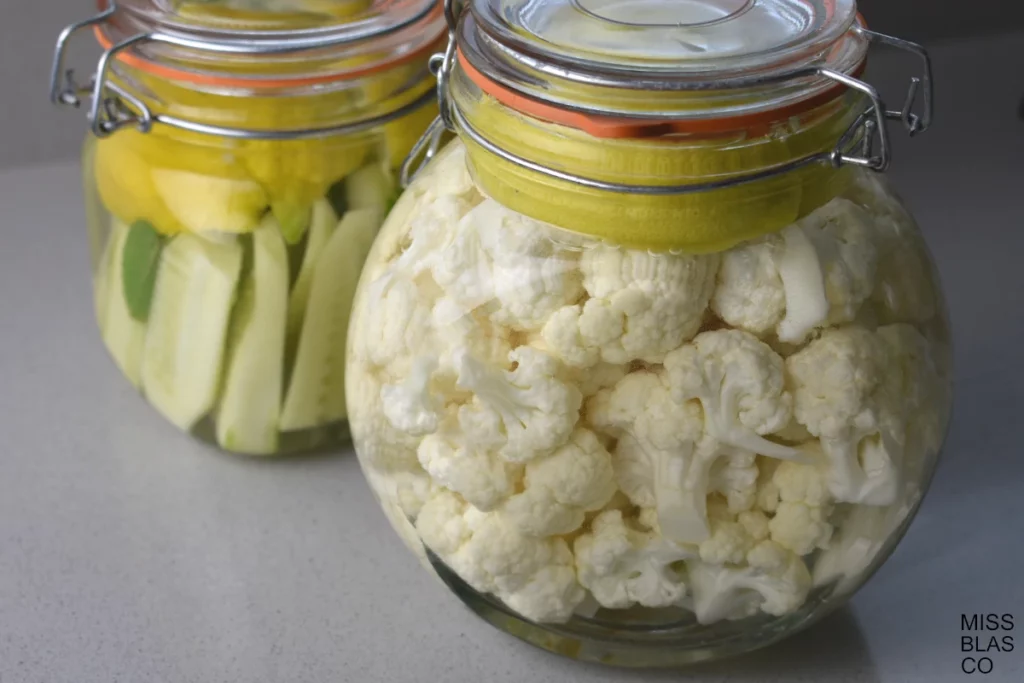
- Carrots & Cauliflower: They become crunchy, tangy appetizers that are far more interesting than their raw versions.
- Fermented Lemons: Once you use them in dressings or hummus, you won’t be able to stop. They add a probiotic boost and a deep, salty-citrus flavor.
Learn how to ferment vegetables at home to enjoy new flavors while naturally improving your digestive health.
Fermentation Engineering: What You Need
You don’t need a laboratory to start. You just need “fermentation engineering” at a home level:
- Glass Jars: You can use special ones or simply recycle jars you already have.
- Weights: To ensure the food stays submerged. Remember: Lactic fermentation is anaerobic. If oxygen touches the vegetables, unwanted fungi or bacteria will grow.
- Filtered Water & Sea Salt: Avoid chlorine and additives.
- A Cool, Dark Space: A cupboard at 18ºC-20ºC is perfect.
- Patience: As Sandor Katz (the father of “Wild Fermentation”) says, patience is the most important ingredient.
Summary of Benefits: Why Ferment Today?
- Intestinal Health: It’s a direct delivery of beneficial bacteria.
- Microbiota Diversity: Essential for overall health and longevity.
- Freedom & Sustainability: It reduces food waste and gives you control over your nutrition.
The main objective of this post is to motivate you. Don’t be afraid to make mistakes, that is how we learn. In future posts, I will share specific recipes for each of these vegetables so you can start your own probiotic pantry.
Remember: Fermenting is life.
Explore my full collection of probiotic recipes:
- How to Make Sauerkraut at Home
- How to Ferment Lemons
- How to Make Easy Kimchi
- How to Ferment Cucumbers
BLOG, FERMENTATION, GUT HEALTH, HEALTH, LOW CARB, PROBIOTICS
Ely
Muchas gracias! Fantástico todo…empezaré con ello
missblasco
Solo se necesita un poco de paciencia y a disfrutar del sabor y de sus propiedades, nuestra microbiota se lo merece y nuestra salud también!. Saludos! 😉
Rafaela Juana Rodriguez Parra
Hola, unavez hecha la col, al sacar parte del bote. Hay que tener alguna precaución?, además de utilizar el tenedor o cuchara…que se introduzcan siempre limpios, lo que sigue quedando en el bote. Debe quedar siempre cubierto con el caldo? Y de haber poco liquido y no quedar sumergido, se le podría añadir algún líquido como por ejemplo ” agua ” de no deberse añadir nada como proceder?. Muchas gracias.
missblasco
Hola Rafaela,
para manipular la col debes usar siempre un utensilio de madera limpio, es mejor que no sea metálico. Si consideras que el chucrut está en su punto, guarda el resto en el frigorífico, si está sumergido, mejor. Si no queda líquido de fermentación y los guardas en la nevera no habrá peligro de que se estropee al menos en unos días, si pretendes conservarlo por mucho tiempo deberías añadir un poco más de salmuera (agua con sal), pero lo aconsejable es consumirlo sin tener que añadirla.
Saludos!
Bárbara
¡Hola! Me he topado con tu blog por casualidad ¡y me he enamorado! Respecto al tema fermentación… ¿el agua filtrada cómo la consigues? ¿Con una jarra específica? Es que no me caben más cacharros en la cocina 😂😂😂. Muchas gracias.
missblasco
Jajaja! No!, no necesitas más cacharros, cuando digo agua filtrada me refiero a la de ósmosis si es del grifo, pero también puedes usar agua mineral, de botella.
Saludos 😉
سعید ایرانی از کشور ایران
I have had diarrhea for years.
The medical-laboratory equipment was unable to diagnose the cause of the disease.
I started studying myself.
Every chemical and herbal medicine I used was ineffective.
Hippocrates (father of medical sciences): The sweetness of one victory is worth the bitterness of a hundred defeats.
By accident and miraculously, I got better with fermented pickles.
Hippocrates: Your food should be your medicine.
Fermented pickles are rich in intestinal bacteria.
Fermented pickles are an amazing source of gut bacteria.
Fermented pickles have probiotic properties.
Gut bacteria are called probiotics.
The role of probiotics in the prevention and improvement of disease symptoms:
Probiotics help to restore and grow beneficial mucosal bacteria, especially in the intestines. If the balance of intestinal bacteria is disrupted, intestinal dysfunction occurs, which can cause acne, food allergies, extreme fatigue, depression, headaches, and the most common of all. (often) suffers from chronic diarrhea.
So I came to the conclusion that the beneficial bacteria in my gut were destroyed.
The name of this disease is dysbiosis.
When the pickles ran out, the disease returned.
I made this pickle by accident and miracle with only salt water and cucumber.
I did not use vinegar, pepper, garlic, etc.
How to prepare fermented pickled cucumbers?
Thanks
The only help you give is to like so that the views of the article increase and all people are informed
Don’t forget to like. Let me see what you are doing