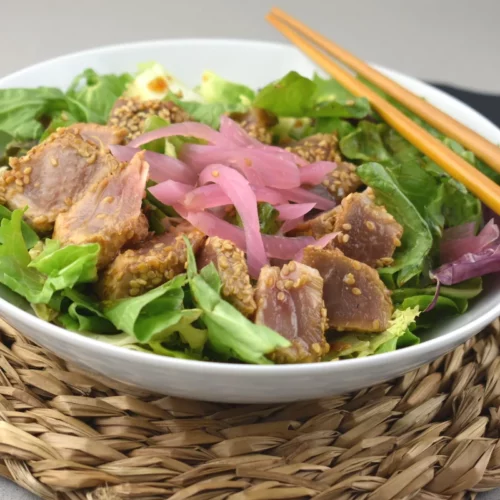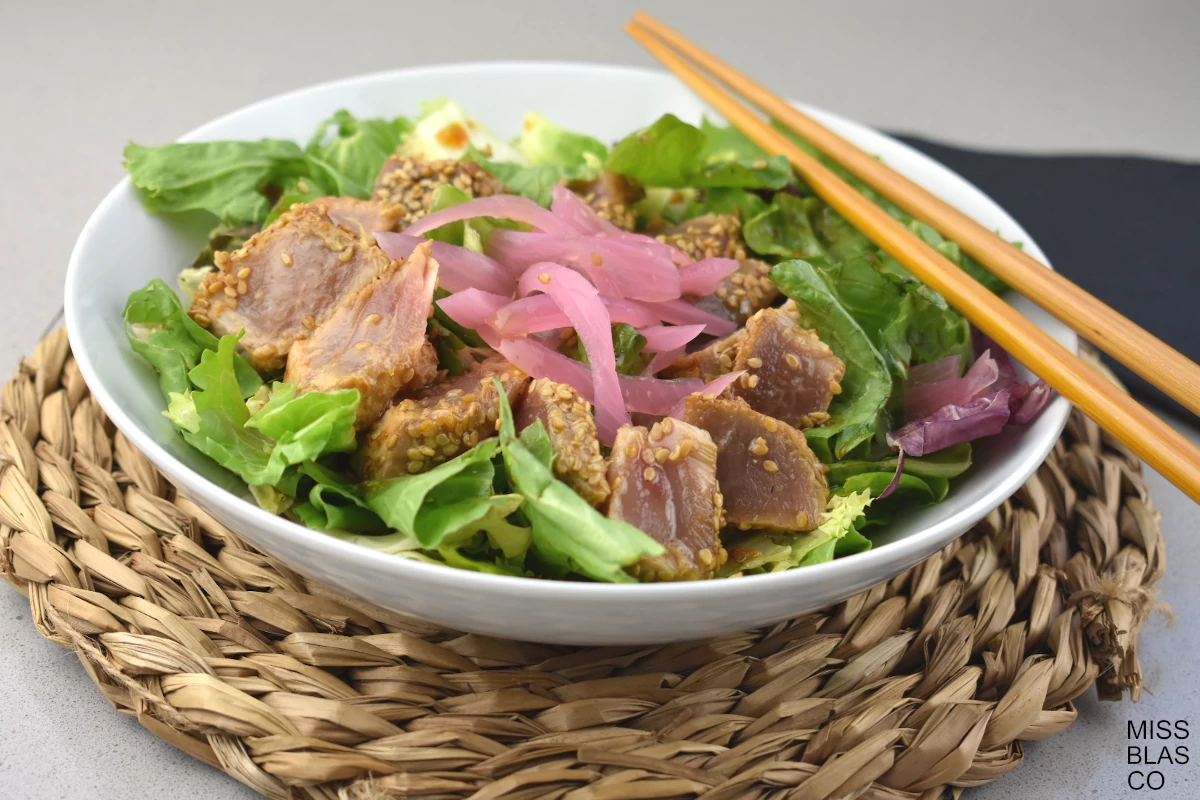
Easy Tuna Tataki Salad
The Science of Omega-3s
Finding the perfect synergy between high-quality protein and cardiovascular-protective fats is a primary goal. The Tuna Tataki Salad is an exemplary dish that meets these criteria, offering a nutrient-dense, low-carbohydrate experience that is as visually vibrant as it is metabolically beneficial.
By utilizing the tataki technique, a Japanese method of searing protein over intense heat while leaving the center raw, we preserve the integrity of the delicate fatty acids and proteins that can often be degraded by overcooking.
This dish is not just a meal, it is a strategic tool for those looking to improve their lipid profile and maintain muscle mass through high-biological-value protein.
Nutritional Biochemistry: The Power of Blue Fish
Tuna is classified as a “blue fish,” a category of oily fish renowned for its high concentration of Omega-3 fatty acids. Incorporating this type of protein into your dietary rotation at least once every 15 days is a foundational habit for long-term wellness.
Key Nutritional Benefits:
- Omega-3 Fatty Acids (EPA and DHA): These essential fats are potent anti-inflammatories. They protect the cardiovascular system by helping to lower triglycerides and manage cholesterol levels.
- B-Complex Vitamins: Essential for energy metabolism and neurological health.
- Essential Minerals: Tuna is a significant source of iron (crucial for oxygen transport and preventing anemia), magnesium, and phosphorus.
- Vitamin D and Calcium: This duo is indispensable for bone density and immune function.
Tuna tataki preserves the heat-sensitive Omega-3 fatty acids by using a rapid searing technique, ensuring maximum cardiovascular benefit per serving.
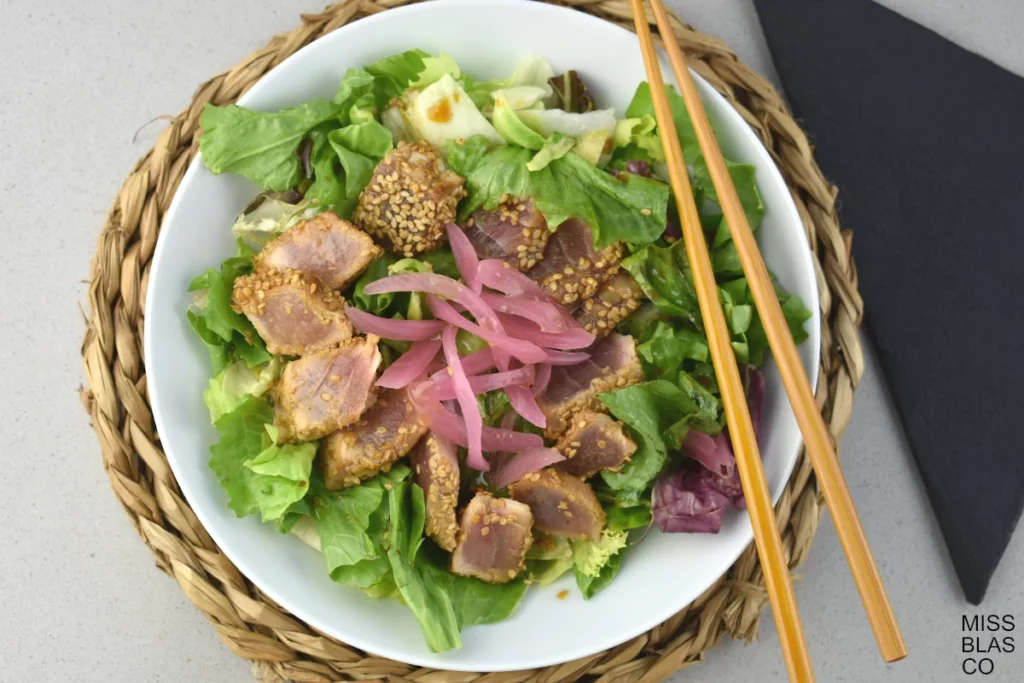
The Art of the Tataki
The term tataki refers specifically to the preparation of the fish. While it can be applied to salmon or even high-quality beef, tuna is the gold standard for this method.
Sourcing and Safety
Because the center of the tuna remains raw, the quality of the raw material is paramount. As a professional, I recommend the following safety protocol:
- Origin and Freshness: Always check the capture date. If buying fresh, ensure the fish has a clean, oceanic smell and firm texture.
- The 72-Hour Rule: To mitigate risks associated with parasites, it is mandatory to freeze fresh tuna for at least 72 hours.
- Slow Thawing: Thaw the fish slowly in the upper, coldest part of the refrigerator to maintain the cellular structure and prevent moisture loss.
- Label Literacy: If purchasing frozen tuna, read the label carefully. Avoid products with “added water” or stabilizers; the only ingredient should be tuna.
The Marinade: Flavor Infusion and Chemical Tenderization
While marinating is technically optional, from a professional culinary perspective, it is the step that defines the dish. A well-crafted marinade does not just flavor the fish; it initiates a light “curing” process.
I suggest a simple yet powerful combination of:
- Organic Soy Sauce: For umami and depth.
- Lemon Juice: The acidity acts as a mild denaturant for the proteins.
- Fresh Ginger and Garlic: These provide the aromatic “punch” and offer digestive and immune support.
- Extra Virgin Olive Oil (EVOO): To provide a base for the fat-soluble aromatics.
For optimal results, allow the tuna to soak for 6 to 12 hours. This provides the flexibility needed for batch cooking or meal prep; you can prepare the marinade in the morning for a quick lunch or the night before for a fast, gourmet dinner.
Utilizing a soy and ginger marinade acts as a natural tenderizer while providing antioxidants and anti-inflammatory compounds like gingerol.
The Dressing
A salad is only as good as its dressing. To complement the tataki, I prepare a vinaigrette using:
- Soy sauce and lemon juice.
- Freshly squeezed ginger juice: (Simply grate fresh ginger and squeeze the pulp to extract the liquid).
- Garlic powder and EVOO.
Adding Fermented Vegetables
To elevate the salad from a standard side to a professional dish, I incorporate fermented vegetables. If you practice fermentation at home, this is the perfect time to use your fermented red onions, cauliflower florets, or even fermented cherry tomatoes. These provide a probiotic boost and a sharp, acidic crunch that cuts through the richness of the tuna.
For a touch of sweetness and enzymes, you may also add sprouts or seasonal fruits like mango, though keeping it focused on leafy greens and fermented roots will keep the carbohydrate count low and the fiber content high.
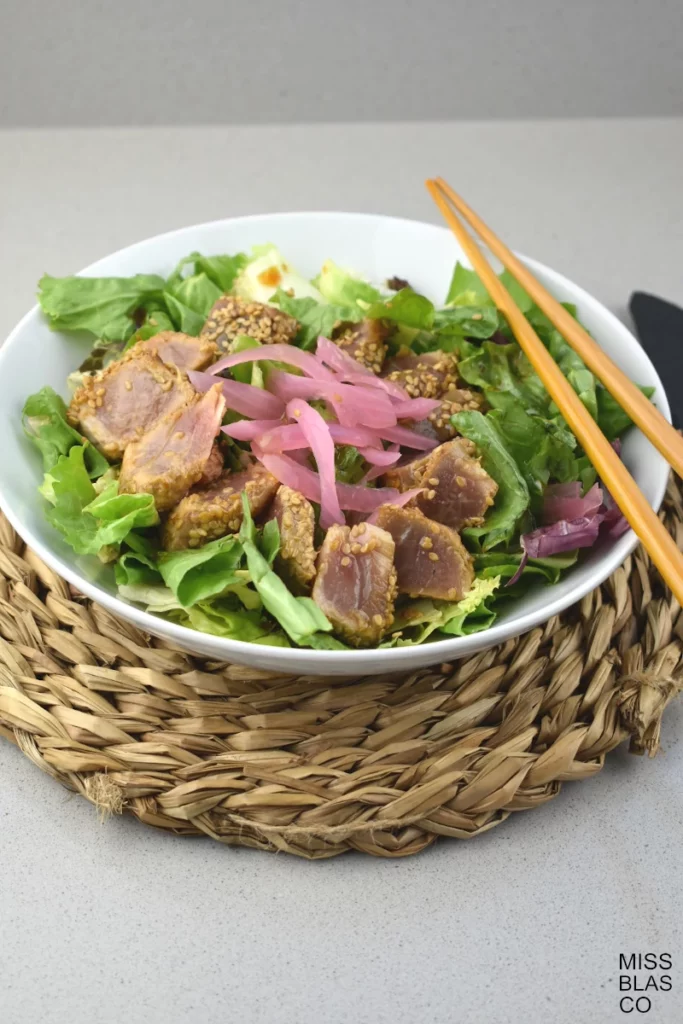
A Culinary Staple
The Easy Tuna Tataki Salad is a testament to the fact that healthy eating does not require sacrificing flavor or sophistication. It is a satisfying, low-carb meal that supports everything from heart health to bone density. By mastering the marinade and the quick-sear technique, you add a versatile, high-protein recipe to your “wardrobe of ideas.”
I encourage you to source a high-quality piece of tuna this week and try this method. It is a dish that meets all professional expectations for a balanced, functional, and deeply delicious meal.
Integrating fermented vegetables into the salad adds a probiotic layer that enhances nutrient absorption and supports the gut-brain axis.
Elevating your protein sources with techniques like tataki is a game-changer for metabolic health. Have you tried incorporating fermented vegetables into your salads for that extra probiotic boost? I would love to hear about your favorite marinade variations and how your tuna turned out in the comments below.
More delicious low carb recipes:
Easy Tuna Tataki Salad
Learn how to prepare a Tuna Tataki Salad. This post explains the benefits of Omega-3s, proper fish safety, and the art of a perfect marinade.Ingredients
- 10.5 oz fresh or frozen tuna steaks approx. 2 medium fillets
- 7 oz mixed salad greens about 5-6 cups
- 2 tbsp toasted sesame seeds
- 3 tbsp soy sauce low-sodium preferred
- 2 tbsp fresh lemon juice
- 2.5 oz fresh ginger one large knob
- 2 garlic cloves
- 3 tbsp extra virgin olive oil EVOO
- 1 pinch garlic powder
- 1/2 cup fermented white or red onions optional for a probiotic boost
Instructions
The Marinade
The Vinaigrette
Prepare and Marinate the Tuna
Notes
This dish is a "wardrobe staple" for cardiovascular health. The Omega-3s in the blue fish help manage cholesterol levels, while the addition of fermented onions provides the crunch and acidity needed to balance the rich tuna. For a more complete meal, you can add a hard-boiled egg for extra satiety.Tried this recipe?Let us know how it was!