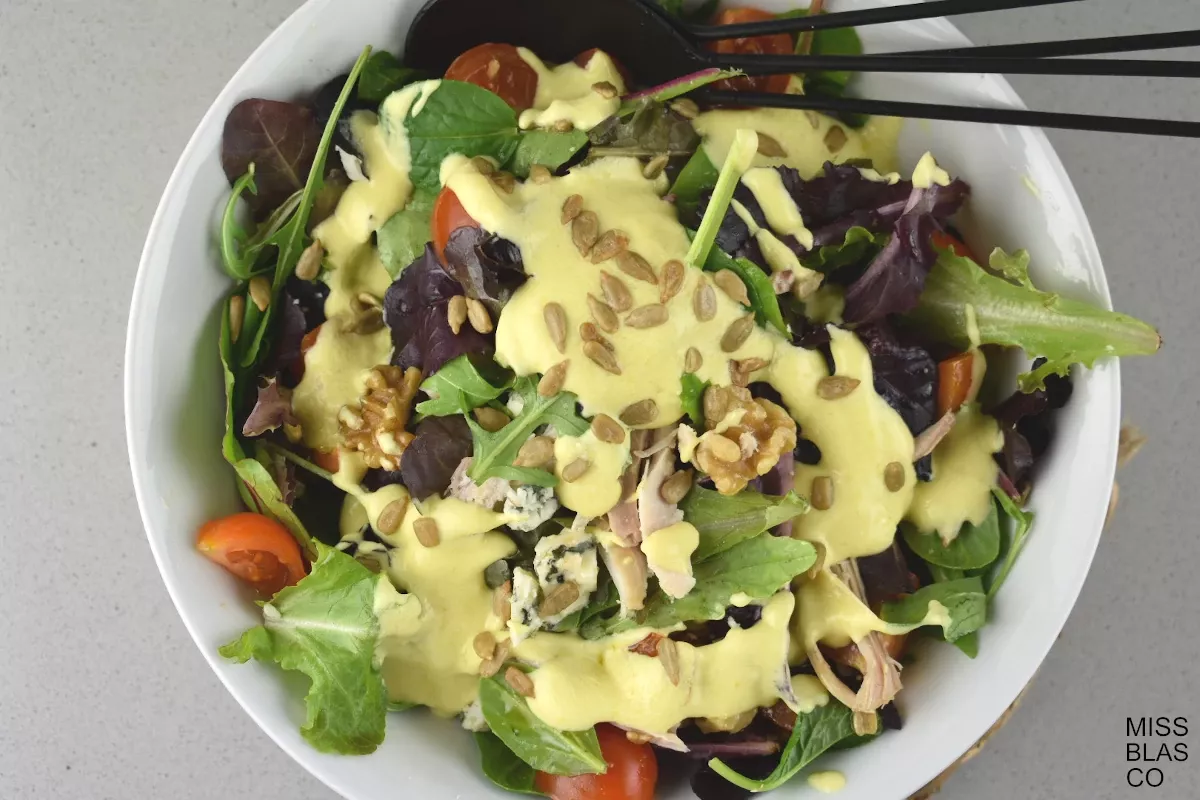
Chicken Salad with Yogurt Sauce
The Versatility of the Salad
If you have leftover roast chicken in your refrigerator, do not let it go to waste. Instead, transform it into a sophisticated chicken salad featuring a vibrant yogurt and mustard sauce. This healthy dish is the perfect solution for an express dinner when time is short but your nutritional standards remain high.
Salads are often misunderstood as mere accompaniments or boring diet staples. In reality, a salad is one of the most versatile tools in a nutritionist’s repertoire. It allows for endless combinations, serves as a brilliant vehicle for using up leftovers, and requires remarkably little time to prepare. Whether you are aiming for weight management or simply looking for a refreshing meal, a well-constructed salad should always be a top-of-mind option.
The Science of the “Leftover” Meal
Yesterday, I found myself with a classic dilemma: a single roasted chicken thigh and drumstick remained in the fridge, alongside a bag of assorted tender sprouts. I also recalled a few walnuts tucked away in the pantry and some shelled sunflower seeds, one of my favorite sources of healthy fats and minerals.
In my clinical practice, I often advocate for the “improvised” meal. Learning to give a twist to leftovers is not just about reducing food waste, it is about taking control of your nutrition. Many of us remember the chicken salads of our youth, those served in restaurants during our twenties, often drenched in heavy, sugar-laden “pink sauce” (cocktail sauce) and loaded with fruit. While those versions were palatable, they were often caloric bombs disguised as healthy choices.
For this evening version, I decided to modernize the concept. I skipped the fruit to keep the glycemic load low before sleep and improvised a dressing that provides creaminess without the inflammatory oils found in commercial mayonnaises.
Transforming leftovers into a balanced salad is an essential skill for maintaining a consistent nutritional plan without food waste.
Building the Perfect Bowl
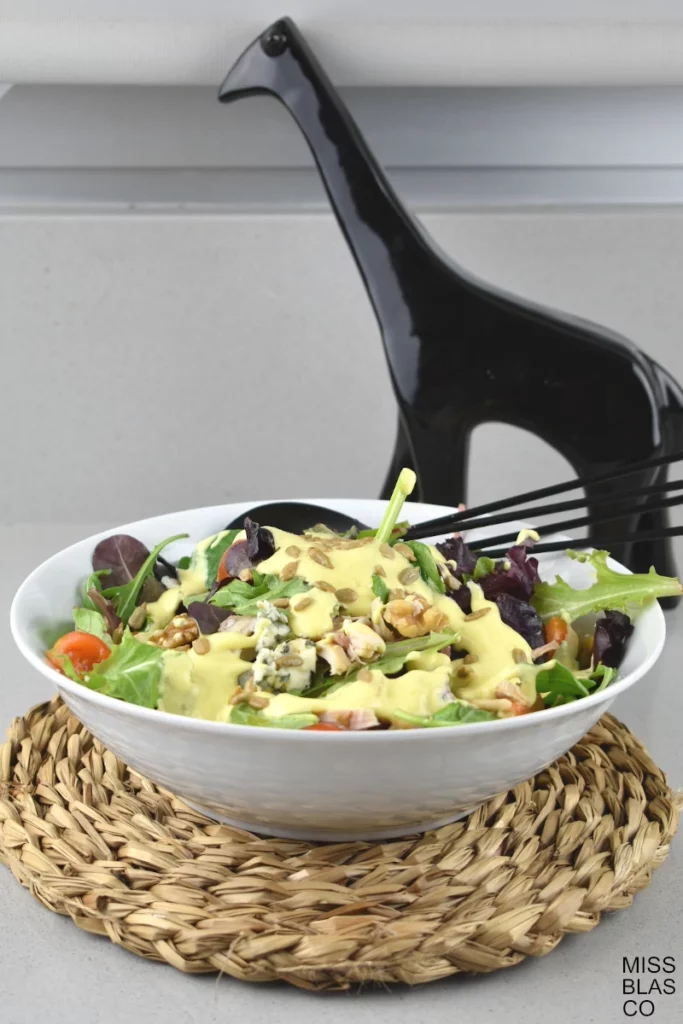
To create this salad, I shredded the cold roast chicken and combined it with the mixed lettuce leaves. To add depth and complexity, I incorporated several key ingredients:
- Walnuts: These provide essential Omega-3 fatty acids and a satisfying crunch.
- Sunflower Seeds: A great source of Vitamin E and magnesium.
- Roquefort Cheese: A small amount of crumbled blue cheese provides a powerful flavor punch, meaning you need less salt and fat overall.
- Cherry Tomatoes: These add acidity and lycopene, a potent antioxidant.
The Secret is in the Dressing: The Yogurt-Mustard Hack
The dressing is where many salads fail nutritionally. Instead of reaching for a store-bought bottle, I whisked together a quick sauce using natural yogurt as the base.
Natural yogurt is a probiotic-rich alternative to mayonnaise. By adding a tablespoon of sharp mustard, a splash of fresh lemon juice, sea salt, and white pepper, you create a dressing that is high in protein, low in fat, and incredibly zingy. When mixed with the shredded chicken and greens, it creates a cohesive, “incredible” flavor profile that rivals any restaurant offering.
Selective Memory and Culinary Creativity
It is fascinating how our memory works when it comes to food. We often recall dishes we have eaten in the past, some we loved, some we didn’t. However, memory is selective and biased by our culture, habits, and attitudes.
I mention this because what we remember eating isn’t always exactly what was on the plate, but that doesn’t matter for our purposes as home cooks. Use those half-remembered flavors as inspiration. If you recall a specific texture you enjoyed at a restaurant, recreate it at home. If there was an ingredient that didn’t sit well with you, avoid it. Complete those culinary memories in your own way, adapting them to your current health goals.
A simple combination of high-quality ingredients is always superior to a cluttered bowl; focus on flavors that truly complement each other.
Why the Salad is a Nutritional Powerhouse
- Vegetable Dominance: It ensures a high intake of fiber, vitamins, and minerals.
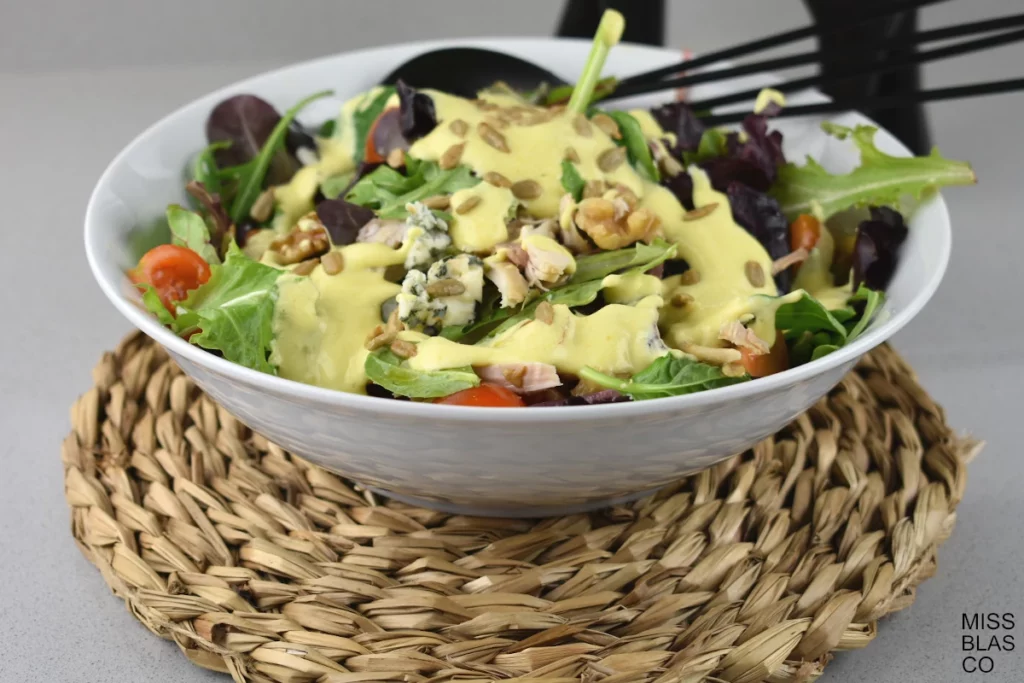
- The Play of Textures: The contrast between the smoothness of a yogurt sauce and the crunchiness of toasted nuts makes the eating experience more mindful and satisfying.
- Efficiency: It is arguably the easiest “real food” dish to prepare.
- Adaptability: The ingredients can vary daily based on what is in your fridge, preventing “diet fatigue.”
- Aesthetic Appeal: We eat with our eyes first. A salad full of varied colors (red tomatoes, green sprouts, white cheese) is naturally more appetizing and signals a wider variety of phytonutrients.
Utilizing natural yogurt as a dressing base provides probiotics and protein while eliminating the hidden sugars and fats of commercial sauces.
I encourage you to look at your refrigerator with new eyes. That leftover piece of chicken or those few remaining nuts are the seeds of a gourmet, nutritious meal. Making a salad is an easy resource, but it is also an act of creative self-care. It is about mixing different elements to create a new, vibrant whole.
Try this chicken salad with yogurt and mustard sauce tonight. It is fast, it is healthy, and it proves that “leftover” doesn’t have to mean “second best”.
Discover more healthy salads:
Chicken Salad with Yogurt Sauce
Ingredients
- 1/2 lb Leftover roast chicken shredded.
- 2 cups 2 cups assorted tender sprouts or mixed greens.
- 12 Walnuts crushed and a tablespoon of sunflower seeds.
- 1 oz Crumbled blue cheese
- 12 Cherry tomatoes halved
Dressing:
- 1/2 cup Greek yogurt
- 1 tbsp Dijon mustard
- Lemon juice 1/2 lemon
- 1 pinch Salt
- 1 pinch White pepper
Instructions
- In a large bowl, toss the greens with the shredded chicken and tomatoes.
- In a small ramekin, whisk the yogurt, mustard, lemon juice, and spices until smooth.
- Drizzle the dressing over the salad and toss gently to coat.
- Top with the walnuts, sunflower seeds, and crumbled cheese right before serving to maintain the crunch.