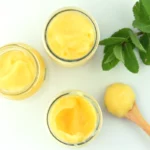
Sugar-Free Lemon Curd
This Sugar-free Lemon Cream is a delicious cream that you can use to make your own version of the classic lemon tart.
Servings 4 portions
Equipment
- Regular pot
- whisk
Ingredients
- 2 large eggs approx. 4.2 oz / 120g
- ½ cup fresh-squeezed lemon juice approx. 100ml / 3.4 fl oz
- 2 tbsp erythritol Adjust to taste; see notes below
- ½ tbsp tapioca starch Cornstarch may be used as a substitute
- ½ tsp agar-agar powder or Unflavored gelatin (check the package for gluten-free)
- Zest of 1 lemon Avoid the white pith to prevent bitterness
Instructions
- Initial Mixing: Combine all ingredients in a small saucepan. Before turning on the heat, whisk everything together vigorously until the starch is fully dissolved and the mixture is uniform.
- Cooking: Turn the heat to medium-low. Cook the mixture for approximately 4 to 5 minutes until it thickens. Crucial Tip: You must whisk constantly to prevent the eggs from curdling or the mixture from sticking to the bottom. Keep the heat gentle; do not let it boil.
- Cooling: Once the curd has reached a thick, pudding-like consistency, transfer it to a glass jar or bowl. Allow it to cool at room temperature before refrigerating.
- Serving: Enjoy it as is, paired with fresh blueberries, or use it as a premium filling for a healthy lemon tart.
Notes
- Scaling the Recipe: If you want to make a larger batch, the basic ratio is 1 egg to ¼ cup (50ml) of lemon juice and 1 tbsp of erythritol. However, the thickeners (tapioca and agar-agar) do not need to be doubled immediately. For example, you can use 3 eggs, ¾ cup of juice, and 3 tbsp of erythritol while keeping the same amount of tapioca and agar-agar, and it will still set perfectly.
- Adjusting Sweetness: This recipe leans toward a sharp, acidic profile. If you prefer a sweeter curd, increase the erythritol or use an erythritol-stevia blend, which has a higher sweetening power (check your package for conversion rates).
- Storage and Freezing: This lemon curd is exceptionally stable. You can freeze it without losing its organoleptic properties (color, flavor, and texture). This is a great way to ensure you always have a healthy dessert component ready for last-minute preparations.