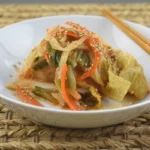
How to Make Easy Kimchi
Easy Homemade Kimchi: Learn the science of Lactobacillus kimchii, the benefits of lactic fermentation, and a simple recipe for gut health.
Servings 12 portions
Calories 52kcal
Equipment
- Glass jars
- Wooden spoon
- Big bowl
Ingredients
For the Vegetable Base:
- 2 lb Napa Cabbage Akusay: 1 medium head. (If unavailable, use green cabbage).
- 1 cup Coarse Sea Salt For brining (you may not need it all).
- 1 lb White Radish Daikon: 1 large unit, julienned.
- 1/2 lb Carrot 2 large unit, julienned or grated.
- 1/4 lb Green Onions The green stalks/tops only.
For the Kimchi Paste:
- ½ tbsp Ground Cayenne Or 4–6 dried chili peppers.
- ½ tbsp Smoked Paprika Optional "Spanish touch."
- 4 tbsp Soy Sauce (A vegan alternative to the traditional fish sauce).
- ½ cup Cooked White Rice Soft-cooked.
- 3 cups Rice Cooking Water Use the salted water from boiling the rice, this acts as the starch base.
- 1/8 lb Garlic 3-4 cloves.
- 1/8 lb Spring Onion 1 whole unit.
- 1 tbsp Fresh Ginger Peeled.
Instructions
- Wash the cabbage and cut it into quarters lengthwise. If it is very large, cut each quarter in half again. Spread the coarse salt thoroughly over the cabbage, making sure to rub it on the outside and between each individual leaf.
- Rest: Let the cabbage macerate at room temperature for 5–6 hours. The cabbage will release its water and soften.
- Rinse: After the resting period, rinse the cabbage thoroughly under cold water to remove the excess salt.
- While the cabbage rests, julienne or grate the radish and carrots as finely as possible. Chop the green onions. Boil the white rice in salted water for about 20 minutes until very soft. Reserve both the rice and the starchy cooking water.
- In a food processor or blender, combine the garlic, fresh ginger, spring onion, cayenne, paprika (optional), soy sauce, cooked rice, and the reserved rice water. Blend until you achieve a smooth paste. (Or use a comercial kimchi paste).
- Mix the julienned vegetables (radish, carrot, green onion) with the spicy paste. Using your hands (gloves are recommended), rub this mixture onto the cabbage quarters, ensuring the paste is well-distributed between every leaf.
- Note: The cabbage should eventually be submerged in liquid. If the paste isn't enough to cover it, you may need to blend a bit more liquid base.
- Pack the cabbage tightly into glass jars or a flat glass container. Press down firmly to remove air pockets, (use a wooden spoon, not a metalic one).
- Wait: Leave it at room temperature for 48 hours. (Summer Tip: If it is very hot (over 24°C/75°F), 24 hours may be enough.)
- The Bubble Test: Press the cabbage down with a spoon, if small bubbles rise to the surface, the fermentation has successfully begun.
- After the initial room-temperature ferment, store the kimchi in the refrigerator. Ensure the cabbage remains submerged in the liquid.
- The Trick: Place a reserved clean cabbage leaf on the top layer and use a heavy piece of radish or carrot to act as a weight, pressing the kimchi down into the brine.
- Be patient; while it's ready to eat now, the flavors will only get better over the next few weeks and months.
Nutrition
Calories: 52kcal | Carbohydrates: 11g | Protein: 3g | Fat: 0.4g | Saturated Fat: 0.1g | Polyunsaturated Fat: 0.2g | Monounsaturated Fat: 0.1g | Sodium: 9800mg | Potassium: 415mg | Fiber: 3g | Sugar: 3g | Vitamin A: 3770IU | Vitamin C: 34mg | Calcium: 104mg | Iron: 1mg