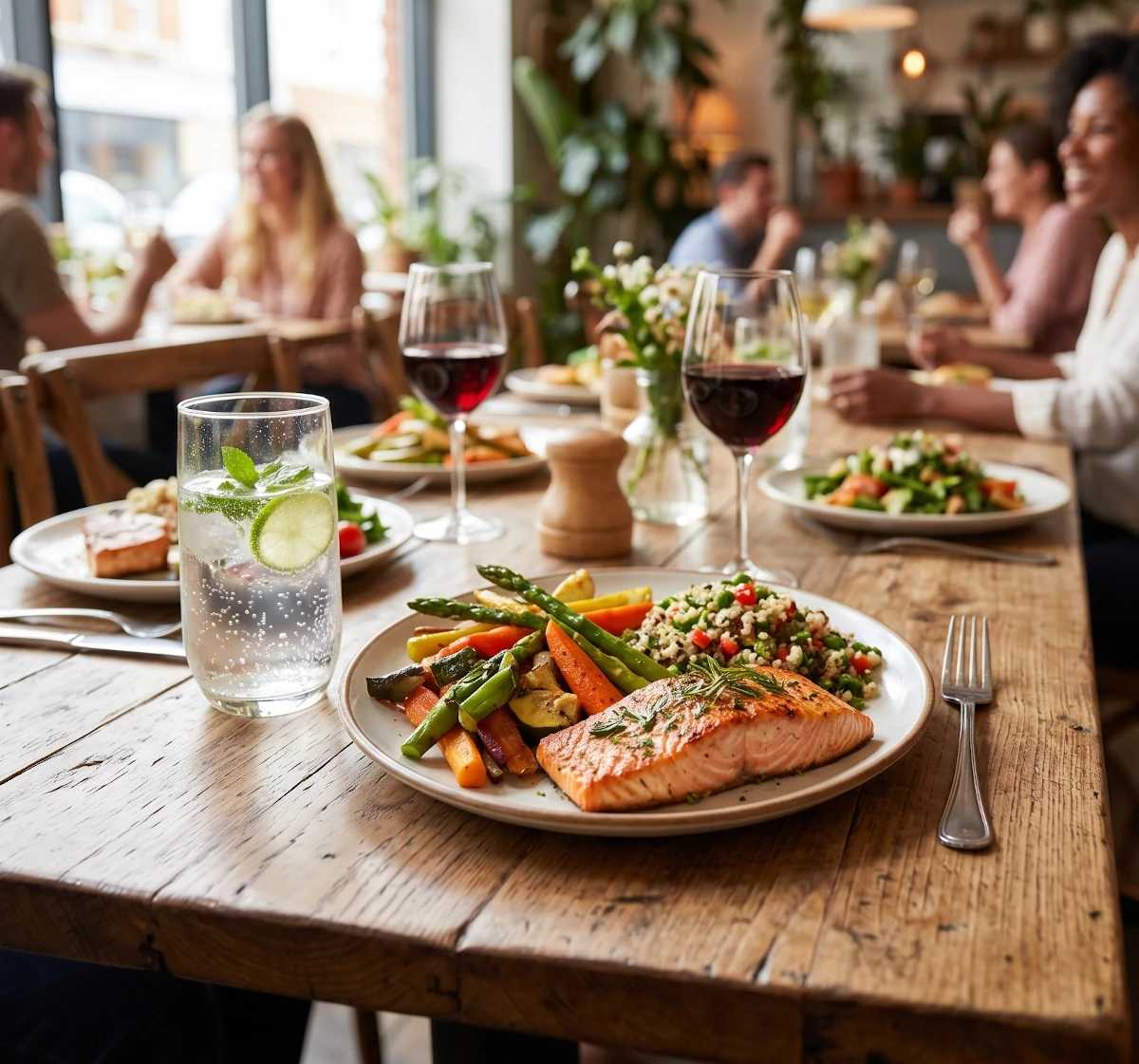
How to Eat Out Without Regrets
After 15 days of living out of a suitcase and eating on the go, I noticed a familiar craving creeping in: the deep, undeniable urge for a simple, home-cooked meal.
Don’t get me wrong, traveling and exploring local cuisines is one of life’s greatest pleasures. It’s not that it’s impossible to find nutritious food outside the home. The real challenge lies in navigating the restaurant environment consciously. Whenever I travel, I aim to eat exactly as I would in my own kitchen: keeping choices varied, focusing on nutrient-dense ingredients, and eating a little bit of everything without overindulging.
However, between hidden ingredients, oversized portions, and clever menu marketing, eating out can quickly feel like an uphill battle for your digestive system and your health goals.
To help you navigate your next dinner out or vacation seamlessly, I’ve put together the ultimate guide to eating out successfully. Here is how you can take control of your plate, protect your energy, and enjoy your social life, guilt-free.
1. Outsmart Hidden Salt and the “Umami Trap”
One of the first things you notice after a few days of eating at restaurants is the waking up feeling bloated, puffy, and intensely thirsty. This is because commercial kitchens rely heavily on sodium to elevate flavors quickly and cheaply.
While you cannot control the salt content cooked into complex stews, soups, or marinated meats, you can take control of your raw and grilled dishes.
The Fix: When ordering salads, grilled fish, or steamed vegetables, ask for them to be prepared with little to no salt. You can easily season them yourself at the table with a touch of sea salt and olive oil.
Watch Out for MSG (Monosodium Glutamate)
Restaurants frequently use MSG, a well-known flavor enhancer that targets our “umami” taste receptors. While MSG is generally recognized as safe, it artificially increases the palatability of food, making it highly addictive and overriding your body’s natural fullness cues. To avoid the overeating trap, prioritize establishments that emphasize whole, fresh, scratch-cooked ingredients.
The “Sauce on the Side” Strategy
2. Master the “Sauce on the Side” Rule
Sauces, dressings, and gravies are notorious hiding places for excess sugar, low-quality industrial seed oils, and massive amounts of sodium. A salad that looks perfectly healthy on paper can easily end up packing more calories and artificial additives than a double cheeseburger once it is drenched in a heavy, store-bought dressing.
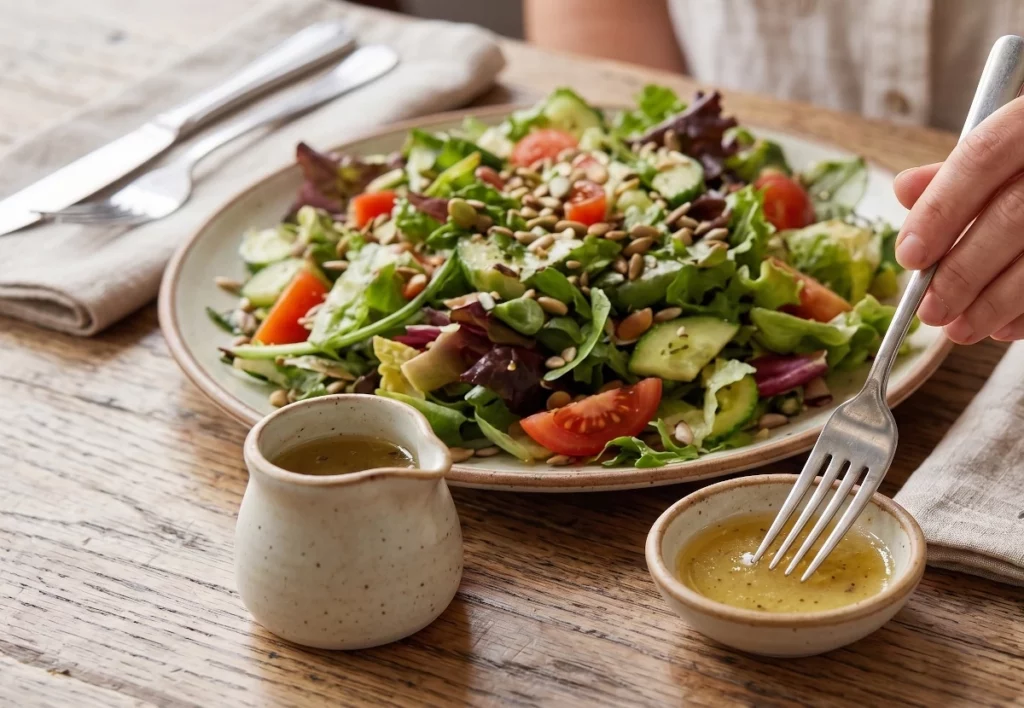
Never let the kitchen decide the ratio of your food. Always ask for sauces, condiments, and dressings on the side.
When your salad or main dish arrives, use the “fork-dip” method: dip your fork into the dressing before grabbing a bite of food. This ensures you get the flavor in every bite while using up to 80% less product. For salads, sticking to a classic visual pairing of extra virgin olive oil and balsamic vinegar is always a winning strategy.
3. Say Goodbye to the Deep Fryer
Fried and battered foods, think croquettes, onion rings, and French fries, are staples of restaurant menus because they are fast and universally appealing. Unfortunately, they are also highly inflammatory, heavy on your digestive system, and can leave you feeling sluggish for hours afterward.
Sometimes, these fried sides sneak onto your plate unexpectedly. Just last week, while reviewing a breakfast skillet dish at “La Cafeteria” in Sacramento, it arrived completely surrounded by a mountain of fried potatoes.
If this happens to you, apply the One-Third Rule:
- Decide upfront to eat only a conscious portion, say, a third of the fried item to satisfy the craving, and leave the rest untouched.
- Better yet, proactively ask the server to swap out French fries or sweet potato fries for a fresh side salad, roasted asparagus, or steamed broccoli.
- If you are genuinely craving carbohydrates, choose cleaner cooking methods: opt for a baked potato or real mashed potatoes instead of deep-fried options.
The Truth About the “Umami Trap”
4. Skip the Sugar Bombs and Smarten Your Starch Choices
When it comes to the end of the meal, restaurants treat dessert like a grand finale, and roughly 90% of those options are processed sugar bombs like cakes, cheesecakes, and pastries.
If you want to maintain stable blood sugar levels and avoid a late-night energy crash, skip the dessert menu entirely. If you want a sweet finish, look for fresh, seasonal fruit. Otherwise, close your meal like a true minimalist: with a cup of black coffee, espresso, or an herbal tea.
Navigating the Bread Basket and Breakfast Buffets
Carbohydrate quality matters immensely. In countries like the US, standard breads (including popular sides like cornbread) are often heavily sweetened with high-fructose corn syrup. If you want bread, ask for genuine whole-wheat toast. Even though it is typically sliced bread, it provides a much better fiber-to-sugar ratio.
Furthermore, if you find yourself facing a hotel buffet breakfast, keep these boundaries in mind:
- Steer clear of the pastry station: Muffins and croissants are desserts masquerading as breakfast.
- Rethink the “healthy” juice: Even 100% natural fruit juice is stripped of its beneficial fiber. Drinking a large glass of orange juice delivers a massive, concentrated load of fructose straight to your liver, spiking your insulin almost instantly. Eat the whole fruit instead.
The One-Third Rule for Sneaky Sides
5. Upgrade Your Liquid Intelligence
What you drink during a meal can quietly double your caloric intake without providing an ounce of satiety. Standard sodas, sweetened mocktails, and commercial juices are packed with empty calories that disrupt your metabolism.
- Water (Still/Sparkling): Gold Standard, keeps you hydrated and aids digestion.
- Unsweetened Iced Tea: Great Alternative, refreshing, antioxidant-rich, and sugar-free.
- Dry Wine: Limit yourself strictly to one glass with your main meal.
- Sodas & Juices: Avoid, triggers blood sugar spikes and increases cravings.