
Sugar-Free Pumpkin and Coconut Pudding
Sugar-Free Pumpkin Coconut Pudding: A Healthy, Creamy and Delicious Dessert
If you’re looking for a naturally sweet, creamy, and healthy dessert that’s also sugar-free, this pumpkin and coconut pudding is exactly what you need. Whether you’re managing your blood sugar, following a low-carb lifestyle, or simply trying to eat better, this smooth and silky pudding is a perfect fit. It’s made with just a few ingredients, rich in nutrients, and ideal for breakfast, a midday snack, or a light dessert.
In this post, I’ll guide you through how to prepare this nourishing recipe, explain why it’s such a healthy option, and show you how it can easily become one of your go-to favorites.
Why You’ll Love This Sugar-Free Pumpkin Coconut Pudding
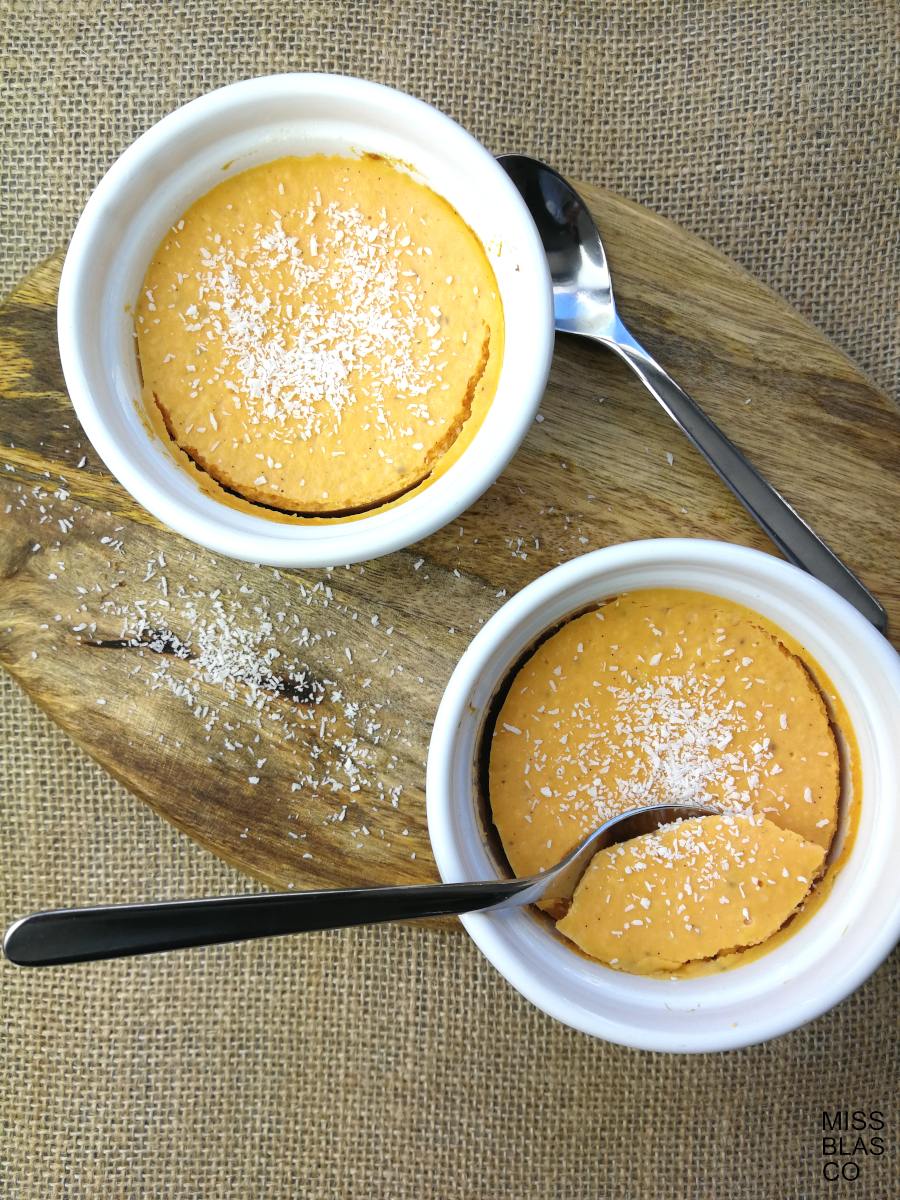
This pudding is naturally sweet, made with no added sugar or sweeteners, thanks to the delicious combination of pumpkin and coconut. The texture is incredibly smooth and creamy, almost mousse-like, which makes it feel indulgent even though it’s light and low in calories.
What makes this pudding really stand out is the cooking method: it’s baked in a bain-marie (water bath), a gentle and healthy technique that helps maintain a soft and juicy texture while avoiding burning or the creation of unhealthy compounds.
The Secret is in the Texture
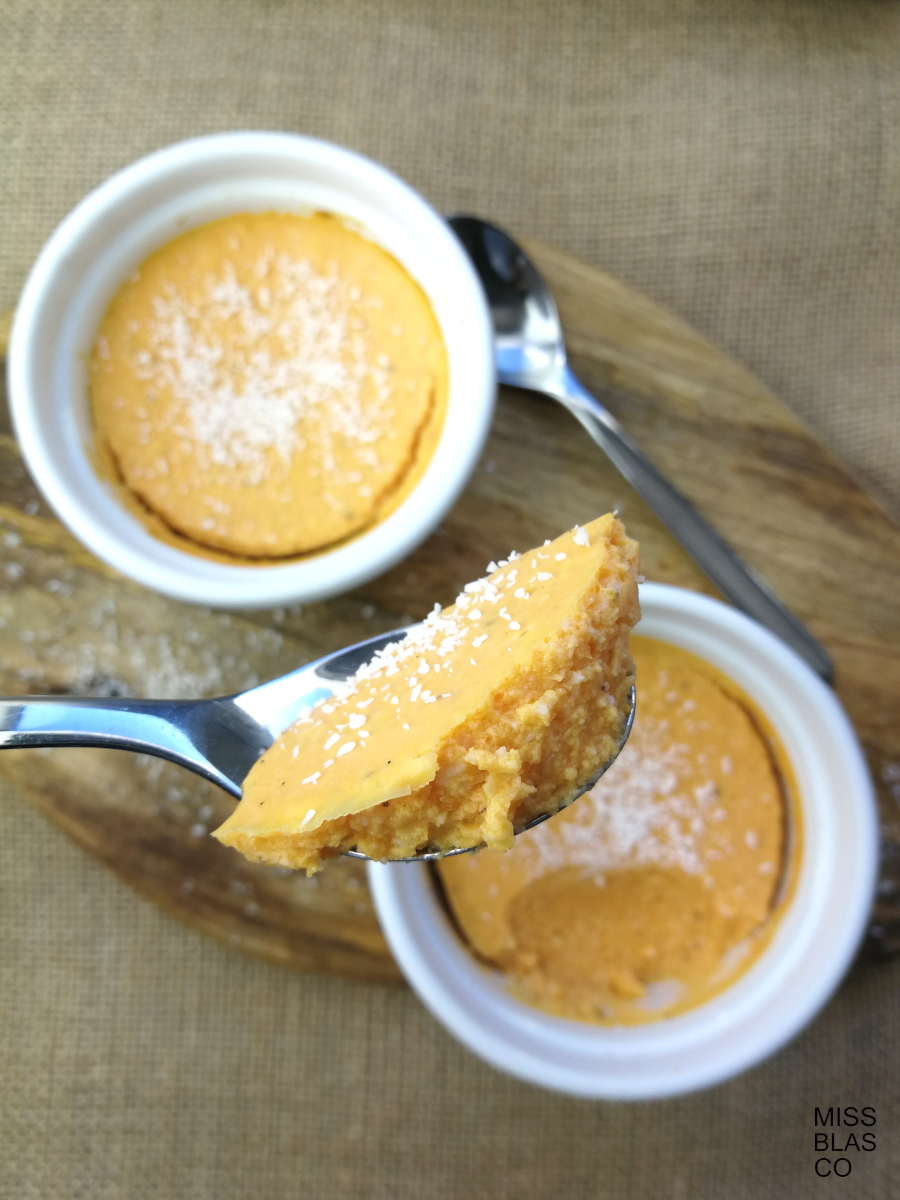
One of the most remarkable things about this recipe is the texture. Silky, creamy, and melt-in-your-mouth smooth—it’s very pleasant to eat, and surprisingly satisfying. The buttery consistency of cooked pumpkin plays a big role here, along with the subtle richness of coconut milk.
To get that perfect texture, I always use the bain-marie technique in the oven. This method creates a humid environment that keeps the pudding from drying out. It allows the mixture to cook slowly and evenly, avoiding browning or burning.
Why is this important? Because when food is cooked too hot or for too long, non-enzymatic browning reactions like the Maillard reaction can occur, which can lead to the formation of unhealthy compounds. By using a bain-marie, you’re not just improving the texture, you’re also choosing a healthier cooking method.
A naturally sweet dessert with no added sugar or sweeteners, perfect for people with diabetes or anyone trying to cut back on sugar.
Nutritional Benefits of Pumpkin
Pumpkin is more than just a seasonal vegetable—it’s a nutritional powerhouse that fits perfectly into a healthy lifestyle:
- High water content helps with hydration and volume without extra calories.
- Rich in fiber, which supports digestion and satiety.
- Low in carbohydrates, making it ideal for people with diabetes or those following a low-carb diet.
- Excellent source of beta-carotene (provitamin A), vitamin C, and E.
- Contains several B vitamins (B1, B2, B3, B6) and folates.
- High in potassium, and contains phosphorus and magnesium.
These properties make pumpkin an excellent ingredient for creating satisfying yet light dishes.
Why Coconut is a Great Companion
Coconut, especially in the form of coconut milk or cream, adds a subtle tropical flavor and a touch of natural sweetness. Nutritionally, it brings some additional benefits:
- High in fiber, which helps regulate blood sugar and supports digestive health.
- Contains important mineral salts such as magnesium, calcium, phosphorus, and potassium.
- Naturally low in carbohydrates, especially compared to other dairy or plant-based creamers.
- Source of vitamin E, a powerful antioxidant.
- Contains lauric acid, a medium-chain fatty acid that supports the immune system.
While coconut is rich in saturated fats, the effects on cholesterol are still debated. Moderation is key, especially for women, where some studies suggest it may increase LDL. Still, when used as part of a balanced diet, coconut can be a healthy and satisfying fat source.
Thanks to the bain-marie cooking technique, this pudding is creamy, juicy, and incredibly smooth.
A Naturally Sweet Dessert Without Sugar
Thanks to the inherent sweetness of pumpkin and coconut, you don’t need to add sugar or any artificial sweeteners to this recipe. That makes it a fantastic dessert option for:
- People with diabetes.
- Those following a low-carb or keto-friendly diet.
- Anyone looking to reduce sugar without giving up dessert.
- To enhance the flavor even more, I like to cook the pumpkin with vanilla and cinnamon. These spices add warmth and depth, and bring out the natural sweetness of the ingredients.
Practical Tips for Preparation
Here are some useful tips to help you get the best results:
- Use individual molds: They help control portion size and are more convenient to serve and store.
- Prepare in advance: These puddings keep well in the fridge for 3 to 4 days, so you can enjoy them throughout the week.
- Serve chilled: The texture becomes even better after resting in the fridge overnight.
- Top with extras (optional): A sprinkle of cinnamon, shredded coconut, or even a small piece of dark chocolate can elevate the experience without compromising the nutritional profile.
An easy, make-ahead recipe ideal for breakfast, snack, or dessert—high in fiber and full of nutrients.
Why I Love This Recipe
- It’s easy to prepare and only requires a few basic ingredients.
- The individual servings help with mindful eating and portion control.
- The texture is outstanding—smooth, juicy, and satisfying.
- It’s a light dessert you can pair with a square of dark chocolate for extra pleasure.
- It fits any time of day—perfect for breakfast, snack, or after dinner.
- It satisfies sweet cravings without sugar or sweeteners.
More Healthy Pumpkin and Sugar-Free Dessert Recipes
This sugar-free pumpkin coconut pudding is proof that healthy eating doesn’t mean giving up the things you love. With its creamy texture, natural sweetness, and nourishing ingredients, it’s a dessert you’ll feel great about enjoying—and serving to others.
So go ahead, try it for yourself. Eating well can be easy, delicious, and deeply satisfying. I’d love to hear your thoughts in the comments.
Sugar-Free Pumpkin and Coconut Pudding
Equipment
- Convection oven
- Blender
Ingredients
- 2 cup butternut squash
- 1/4 cup water
- 2 eggs
- 1/4 cup coconut milk
- 1/4 cup shredded coconut
- 1 pinch sea salt
- 1/2 vanilla bean
- 1 cinnamon stick
- 1 tsp coconut oil
- 1 tsp lemon juice
- 1 pinch ground cinnamon
Instructions
- Cook the pumpkin in a saucepan with the water, the cinnamon stick, and the vanilla bean. (You must slit the vanilla bean open and scrape out the seeds with a paring knife; add both the seeds and the pod to the pumpkin). Add the lemon juice.Cook for 20 minutes over low heat. It is best to keep it covered. If you think it needs more water, you can add a little bit more, but don't overdo it.
- Once the pumpkin is cooked, remove the vanilla bean and the cinnamon stick, then let it cool.
- Add the 2 eggs, shredded coconut, coconut milk, the pinch of salt, the cooked pumpkin, and the freshly ground cinnamon to your food processor. Blend until you achieve a smooth puree.
- Turn the oven on to 400ºF (200°C) and place a tray with water inside; preheat for 10 minutes.
- Grease the entire interior surface of 4 oven-safe individual molds with coconut oil. Divide the mixture among the molds.
- Once the oven is fully heated, place the molds into the water bath. Lower the oven temperature to 350ºF (180°C) and bake for 20-25 minutes. The exact time will depend on your oven; I usually turn on the convection (fan) setting. If you don't use the fan, you may need a few extra minutes.
- Once done, remove the tray from the oven and check each pudding with a toothpick to ensure it is cooked through. Remove the containers from the tray and let them cool to room temperature.
- Store the puddings in the refrigerator. Ideally, they should be well-chilled and allowed to rest for at least 2 hours before serving. To be honest, though, they are even better the next day.
- Serve the pudding in the same container it was baked in. You can sprinkle a little shredded coconut on top or serve it with a square of dark chocolate.
Notes
- Coconut milk can be substituted with heavy cream. I recommend reading labels and buying a cream that contains only one ingredient: cream. Many cooking creams contain carrageenan, an inflammatory substance that is not recommended; it is widely used in the food industry to improve texture, especially in dairy products.
- Coconut oil for greasing the molds can be replaced with butter. I want to emphasize using real butter, not margarine. Remember that margarine is not a whole food; it is an artificially created fat and is not healthy.
- I enjoy this pudding as it is, usually with a little shredded coconut sprinkled on top for decoration, but if you want to give it a special touch, you have more options. For example, whipped coconut cream* (if you avoid dairy) or whipped cream if you consume dairy regularly. You could also prepare a dark chocolate sauce or add some fruit, such as red berries.
6 INGREDIENTS, COCONUT, DESSERT, GLUTEN FREE, LACTOSE FREE, PUDDING, PUMPKIN, SUGAR FREE
María Jesús Gargallo
Buenos días, me gustaría saber la medida de la taza cual es, taza de café, de desayuno? En mililitros cuanto es?
Muchas gracias.
missblasco
Hola María Jesús, entiendo tus dudas, las tazas y cucharas de medir son un método de medida que se usa en el mundo anglosajón, son muy cómodas porque te permiten prescindir de la báscula en la mayoría de los casos.
Hace algunos meses escribí esta entrada para aclarar a qué equivale cada medida. https://www.missblasco.com/las-cucharas-y-tazas-medidoras/
Actualmente puedes encontrar juegos de tazas y cucharas medidoras en grandes superficies y en tiendas de menaje, cada vez se usan más especialmente en repostería, pero también en cualquier otro tipo de receta.
De todas formas te adelanto que media taza equivale a 118 ml y una taza al doble 236 ml. En esta receta puedes redondear y considerar media taza como 125 ml y una taza como 250 ml que suele ser la medida de un vaso de agua estándar.
Espero haberte ayudado, saludos y gracias por comentar. 😉
María Jesús Gargallo
Muchas gracias por la información,
Un saludo 😘
María Jesús Gargallo
Parece muy interesante, aunque un poco difícil calcular cuánto es un cuarto de taza, para mí mejor explicar la medida en mililitros.
Muchas gracias.
missblasco
En esta entrada tienes tablas con las equivalencias, saludos! https://www.missblasco.com/las-cucharas-y-tazas-medidoras/
susana Muñoz
Hola, acabo de encontrar tu página y estoy fascinada por las recetas, yo saqué alta el azúcar y estoy en esa búsqueda de recetas ricas, saludables y sin restricción de comer rico.
con respecto a esta receta tengo una duda, ¿Qué tipo de calabaza es? Soy mexicana y aquí encontramos dos tipos de calabazas, la criolla (esta es redonda y la usan para hacer postres y la calabacita italiana que en otros lados le llaman zuccini,
Gracias por hacer esto, la verdad es que hay muchas páginas de comida saludable que en realidad no lo es, y que están llenas de azúcar. Sólo alguien que vive con el problema de la diabetes puede entender lo que los demás necesitamos. Gracias por compartir tu experiencia. Me pondré manos a la obra con algunas recetas.
missblasco
Hola Susana, me alegra poder ayudarte, porque la finalidad de esta página es precisamente esa, ayudar a las personas que se encuentren en una situación similar a la mía, para que aprendan que pueden cuidarse sin dejar de disfrutar con la comida y los alimentos de verdad.
En esta receta he usado calabaza redonda, la que dices que usáis en los postres, es de color naranja, (en inglés pumpkin), aquí también las usamos en postres, en cremas, sopas de verdura y en guisos. El zucchini, aquí lo llamamos calabacín.
Muchas gracias por tu comentario, me hace muy feliz saber que hay personas a las que les ayuda mi trabajo.
Saludos! 😉