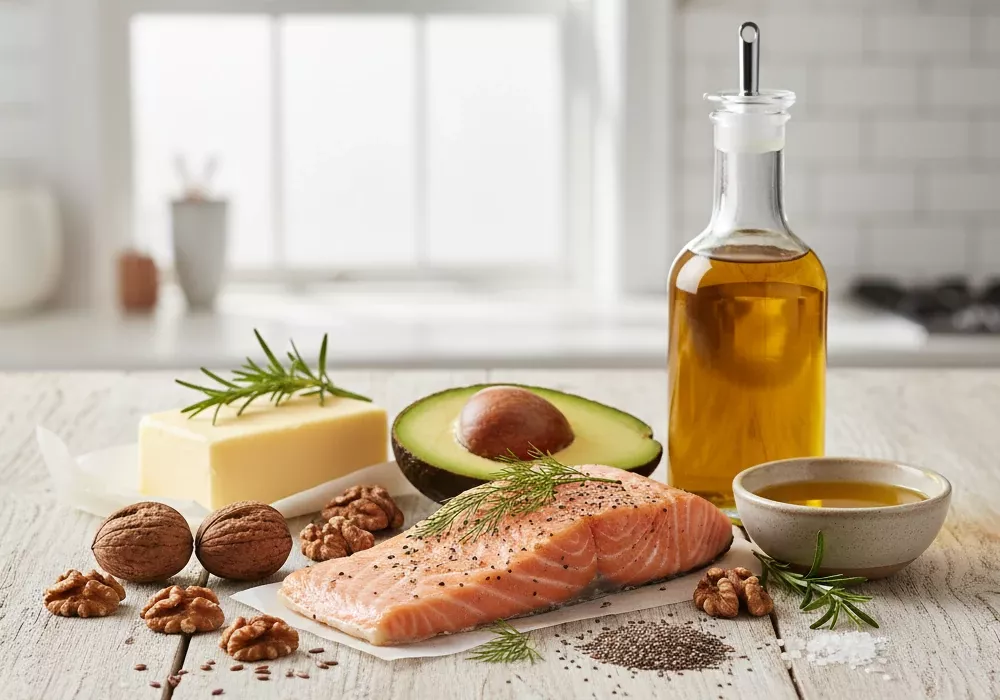
Dietary Fats and Inflammation
Dietary Fats and Inflammation: A Biochemical Perspective on Modern Health
For decades, public health messaging has consistently identified dietary fats as the primary culprits behind the global rise in cardiovascular disease and Metabolic Syndrome. However, as we advance our understanding of lipid biochemistry, it is becoming clear that the demonization of fat as a macronutrient was not only oversimplified but, in many cases, scientifically inaccurate.
To truly master our health, we must move beyond the “fat is bad” narrative and look at the molecular changes and chemical processes that occur within our cells after ingestion. Understanding the distinction between inflammatory and anti-inflammatory lipids is the first step toward a biology-based approach to wellness.
Setting the Biological Stage: Essential vs. Non-Essential Nutrients
In nutritional science, we categorize macronutrients into three pillars: proteins, carbohydrates, and fats. From a strict biochemical standpoint, there is a hierarchy of necessity. Proteins and fats are essential. This means the human body lacks the enzymatic machinery to synthesize certain amino acids and fatty acids from scratch; therefore, we must ingest them to survive.
Conversely, carbohydrates are technically non-essential for human survival. While they can be a source of quick energy, the body can produce glucose through a process called gluconeogenesis. Highlighting this doesn’t mean carbohydrates have no place in a diet, but it underscores the non-negotiable biological importance of high-quality dietary fats for hormone production, cell membrane integrity, and brain function.
The biological impact of dietary fat is determined less by total caloric intake and more by the specific signaling molecules, eicosanoids, that each fatty acid produces in our tissues.
Are Fats Actually Inflammatory?
Associating fat consumption directly with systemic inflammation is a significant biological oversimplification. Inflammation is not a byproduct of “fat” as a category, but rather a result of the specific fatty acid profile we consume and the subsequent signaling molecules they produce.
1. Saturated vs. Unsaturated: A Molecular Look
Saturated Fatty Acids (SFA): These molecules have no double bonds between carbon atoms, making them highly stable and resistant to oxidation. Found in animal products and stable plant fats like cocoa butter and palm oil (palmitic acid), they have been unfairly blamed for heart disease.
Monounsaturated Fatty Acids (MUFA/Omega-9): Represented primarily by Oleic acid (found in Extra Virgin Olive Oil), these are heart-healthy, chemically stable, and serve as the cornerstone of the anti-inflammatory Mediterranean diet.
Polyunsaturated Fatty Acids (PUFA): This is where the biochemical relationship with inflammation becomes complex. Because they have multiple double bonds, they are chemically fragile and highly reactive.
2. The Omega-6 and Omega-3 Balance: The “Fire” and the “Foam”
The two most critical PUFAs are Linoleic acid (Omega-6) and Alpha-Linolenic acid (Omega-3). Because we cannot synthesize them, they are termed Essential Fatty Acids (EFA).
- Omega-6 Pathways: Found in industrial seed oils (soy, corn, sunflower), these can be converted into Arachidonic acid. This molecule is a precursor to pro-inflammatory prostaglandins and leukotrienes. While some inflammation is necessary for healing, an excess acts like “pouring gasoline on a fire.”
- Omega-3 Pathways: Found in fatty fish (EPA/DHA) and flax/chia (ALA), these are potent anti-inflammatories. They inhibit the metabolism of arachidonic acid and regulate gene expression to “cool down” the inflammatory response.
The Golden Ratio: In ancestral diets, the ratio of Omega-6 to Omega-3 was roughly 1:1. Modern Western diets often reach ratios of 20:1, creating a biochemical environment of chronic, low-grade inflammation. To optimize health, we should aim for a ratio of 4:1 or lower.
Proteins and fats are biological imperatives, while carbohydrates are optional, these two are non-negotiable for human life.
What the Science Says: Moving Beyond the Cholesterol Myth
Evidence-based nutrition suggests that the blame placed on saturated fats for hypercholesterolemia is often misplaced. Emerging research points instead to the combination of refined carbohydrates and industrial seed oils as the primary drivers of arterial damage.
Research Spotlight:
- Rheumatoid Arthritis: A meta-analysis (Gioxari et al., 2018) confirmed that high Omega-3 intake significantly benefits patients with rheumatoid arthritis by reducing joint pain and stiffness through the suppression of inflammatory cytokines.
- Metabolic Syndrome: Research by Hyde et al. (2019) demonstrated that restricting dietary carbohydrates improved markers of Metabolic Syndrome—such as triglycerides and HDL levels—even when the diet remained high in saturated fats. This suggests that the “carbohydrate-insulin” model plays a larger role in inflammation than fat intake alone.
The Real Enemy: Industrial Trans Fats
If there is one lipid that should be eliminated entirely, it is Trans fat. While trace amounts occur naturally in ruminant meat (elaidic acid), the vast majority are industrial byproducts of hydrogenation—the process of turning liquid vegetable oils into solid fats (like margarine).
A landmark study in Slovenia (Zupanič et al., 2021) showed that industrial trans fats significantly worsened LDL/HDL profiles and increased C-Reactive Protein (a marker of systemic inflammation). The data is startling: for every 2% increase in daily energy from trans fats, the incidence of cardiovascular disease rises by 23%.
Your Anti-Inflammatory Lipid Grocery List
Fats are not the enemy, but your choices matter. Use this list to audit your kitchen:
Prioritize: High Omega-3 (Anti-inflammatory)
- Animal Sources: Wild-caught sardines, mackerel, salmon, anchovies, and high-quality cod liver oil.
- Plant Sources: Freshly ground flaxseeds, chia seeds, and walnuts.
Use in Moderation: Omega-6 (Balance is key)
- Avocados and avocado oil.
- Pasture-raised poultry and eggs.
- Raw nuts and seeds.
Eliminate: Pro-inflammatory & Oxidized Fats
- Industrial seed oils (Soybean, corn, cottonseed, sunflower, and canola oil).
- Margarine and “vegetable shortening.”
- Ultra-processed snacks containing “partially hydrogenated oils.”
Inflammation is not a byproduct of fat itself, but of the specific type of fatty acids we choose and their balance in our cells.
The Takeaway: Resetting Your Biological Clock
Low-grade chronic inflammation is the “silent architect” of modern chronic disease. By prioritizing stable monounsaturated fats like olive oil, increasing your intake of Omega-3s, and eliminating industrial trans fats, you are essentially re-programming your cellular signaling.
3-Step Action Plan: Balancing Your Lipids Starting Tomorrow
Audit Your Pantry Oils:
Immediately replace industrial seed oils (sunflower, corn, or soybean oil) with Extra Virgin Olive Oil or Avocado Oil for all cooking. This significantly reduces the “background noise” of refined Omega-6 in your diet.
The “Small Fish” Rule:
Aim to include oily fish like sardines or anchovies at least twice a week. These small fish are powerhouses of pre-formed EPA and DHA, and they contain far lower levels of heavy metals than larger fish like tuna or swordfish.
The Daily Seed Ritual:
Add one tablespoon of freshly ground flaxseeds or soaked chia seeds to your morning yogurt or smoothie. This simple habit ensures a consistent daily dose of Alpha-Linolenic Acid (ALA) to help suppress pro-inflammatory pathways throughout the day.
Chronic low-grade inflammation is the silent driver of most modern diseases; balancing your lipids is the first step toward prevention.
Recommended readings about inflammation:
- Gioxari, A., Kaliora, A. C., Marantidou, F., & Panagiotakos, D. P. (2018). Intake of ω-3 polyunsaturated fatty acids in patients with rheumatoid arthritis: A systematic review and meta-analysis. Nutrition (Burbank, Los Angeles County, Calif.), 45, 114–124.e4.https://doi.org/10.1016/j.nut.2017.06.023
- Hyde, P. N., Sapper, T. N., Crabtree, C. D., LaFountain, R. A., Bowling, M. L., Buga, A., Fell, B., McSwiney, F. T., Dickerson, R. M., Miller, V. J., Scandling, D., Simonetti, O. P., Phinney, S. D., Kraemer, W. J., King, S. A., Krauss, R. M., & Volek, J. S. (2019). Dietary carbohydrate restriction improves metabolic syndrome independent of weight loss. JCI insight, 4(12), e128308. https://doi.org/10.1172/jci.insight.128308
- Hutchinson, A. N., Tingö, L., & Brummer, R. J. (2020). The Potential Effects of Probiotics and ω-3 Fatty Acids on Chronic Low-Grade Inflammation.Nutrients, 12(8), 2402. https://doi.org/10.3390/nu12082402
- Scanzello C. R. (2017). Role of low-grade inflammation in osteoarthritis. Current opinion in rheumatology, 29(1), 79–85. https://doi.org/10.1097/BOR.0000000000000353
- Osimo, E. F., Baxter, L. J., Lewis, G., Jones, P. B., & Khandaker, G. M. (2019). Prevalence of low-grade inflammation in depression: a systematic review and meta-analysis of CRP levels. Psychological medicine, 49(12), 1958–1970. https://doi.org/10.1017/S0033291719001454
- Viljoen, M., & Thomas Neé Negrao, B. L. (2021). Low-grade systemic inflammation and the workplace.Work (Reading, Mass.), 69(3), 903–915. https://doi.org/10.3233/WOR-213523
Related posts:
BLOG, HEALTH, INFLAMMATION, LIPIDS, MISSBLASCO, NUTRITION, OMEGA 3